Car Wash Cash Flow Template
Track your car wash's weekly cash position with a spreadsheet built around membership revenue, seasonal swings, and the equipment costs that define the business.
What's Inside This Car Wash Cash Flow Template
This template includes 5 worksheets, each designed for a specific part of your car wash financial workflow:
13-Week Cash Flow
A rolling 13-week view of cash inflows and outflows organized around how car wash businesses actually collect and spend money.
Annual Cash Flow
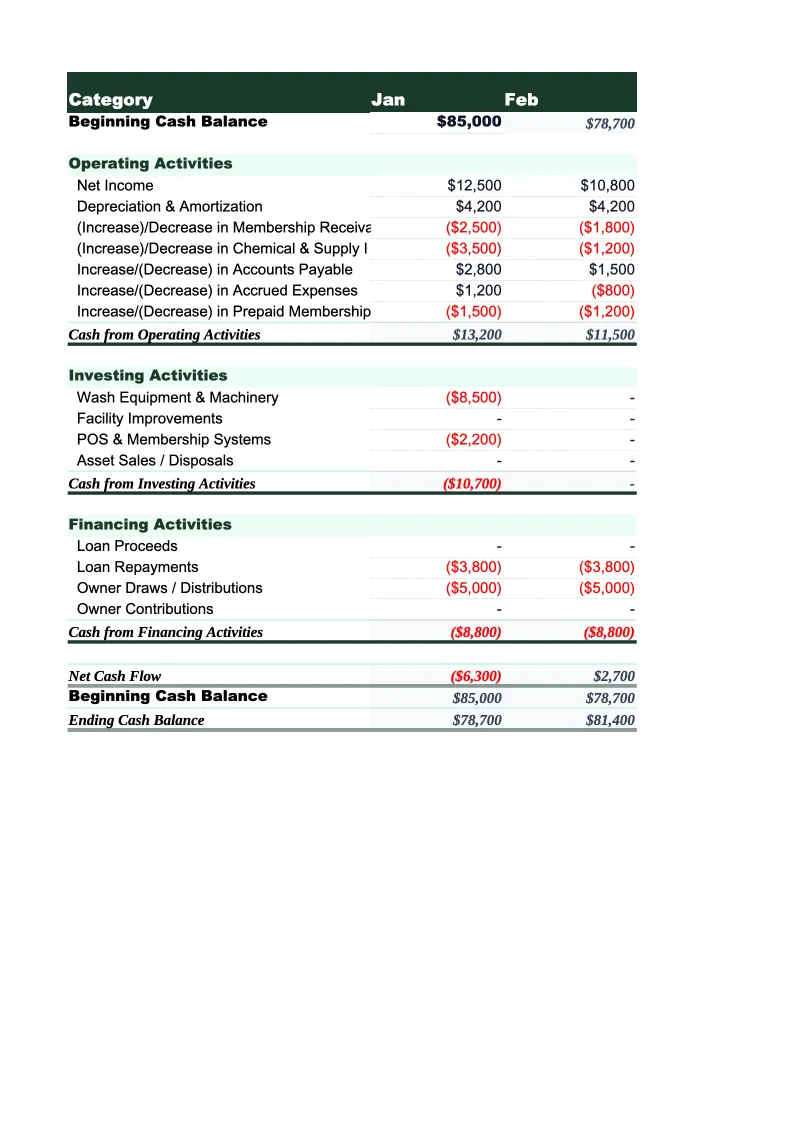
A full 12-month cash flow statement following the indirect method, with operating, investing, and financing sections built for car wash operations.
Membership Revenue Tracker
A dedicated sheet for modeling and tracking subscription-based revenue, which is the financial engine of most modern car wash businesses.
CapEx & Equipment Schedule
A capital expenditure planner for the large equipment purchases that define car wash cash flow.
Seasonality Planner
A monthly adjustment layer that applies seasonal multipliers to your baseline revenue and variable cost projections.
Car Wash Cash Flow Template Features
- 13-week rolling cash flow with retail, membership, and fleet revenue rows
- Annual cash flow statement with operating, investing, and financing sections
- Membership recurring revenue tracker with churn and growth modeling
- CapEx and equipment financing schedule that feeds the annual statement
- Seasonal adjustment planner for monthly revenue and variable cost projections
- Ending cash balance and weeks-of-runway calculation updated automatically
How to Use This Car Wash Cash Flow Spreadsheet
Start with the 13-Week Cash Flow sheet. Enter your current cash balance on hand, then fill in your expected weekly inflows — retail wash revenue, the next membership billing date and amount, any fleet account receivables due, and detailing appointments already on the books. For outflows, enter your next payroll date and amount, scheduled chemical orders, upcoming equipment payments, and utility bills. The sheet calculates your ending cash balance for each week and flags any weeks where you dip below the minimum cash threshold you set.
Once the short-term view looks right, move to the Annual Cash Flow sheet and enter your monthly actuals as the year progresses. The Membership Revenue Tracker feeds into this sheet automatically — just keep your active member counts updated each month and the recurring revenue rows stay current. If you have equipment financing, set up each loan in the CapEx & Equipment Schedule once and it will populate the financing section of the annual statement without you touching it again.
15 minutes from download to your first cash flow projection
Download the template, enter your current cash balance and membership count, and see your car wash's 13-week cash position in one view.
Why Car Wash Operators Need a Cash Flow Template
Car wash cash flow is fundamentally different from most retail businesses because of the combination of high fixed costs and seasonal revenue swings. A tunnel car wash carries significant debt service — equipment loans on systems that can run $500K to $3M — against revenue that can drop 40% in a cold, rainy winter month. Most operators know their busiest and slowest seasons, but without a structured cash flow model, they discover the cash problem in February rather than planning for it in October.
The membership model has changed how cash flow works for car washes, mostly for the better. Monthly recurring membership revenue provides a stable floor that retail-only operations don't have — a wash with 1,000 unlimited members at $30/month has $30,000 in predictable cash inflows before a single retail car rolls through. But membership also creates obligations: each member is entitled to unlimited washes, so a cold snap that drives three times the normal volume from members doesn't generate any additional revenue. Understanding the ratio of membership to retail revenue — and what each membership tier actually costs you in variable expenses — is what separates profitable wash operators from ones who are constantly surprised by their margins.
Car Wash Industry at a Glance
Financial templates built for car wash businesses — from self-service bays and in-bay automatics to full-service tunnels and mobile detailing operations.
Revenue Drivers
- Retail wash sales
- Membership/subscription plans
- Fleet account billing
- Detailing & add-on services
Key Cost Categories
- Labor
- Chemicals & supplies
- Water & utilities
- Equipment maintenance & repairs
- Rent & occupancy
- Credit card processing fees
Typical Margins
Gross: 75-85% · Net: 15-45%
Seasonality
Spring and fall typically peak — customers wash after winter salt and before summer heat; slowest in deep winter in cold climates and during rainy stretches.
Key Performance Indicators
Car Wash Cash Flow Template FAQ
More Car Wash Templates
Car Wash Balance Sheet Template for Excel
$29
Car Wash Budget Template for Excel
$29
Car Wash Business Plan Template for Excel
$39
Car Wash Expense Tracker Template for Excel
$29
Car Wash Financial Model Template for Excel
$29
Car Wash Income Statement Template for Excel
$29
Car Wash Invoice Template for Excel
$29
Car Wash KPI Dashboard Template for Excel
$29
Car Wash P&L Template for Excel
$29
Car Wash Pro Forma Template for Excel
$29
Car Wash Project Budget Template for Excel
$29
Car Wash Sales Forecast Template for Excel
$29
Car Wash Valuation Template for Excel
$29
Car Wash Cash Flow Template
$29