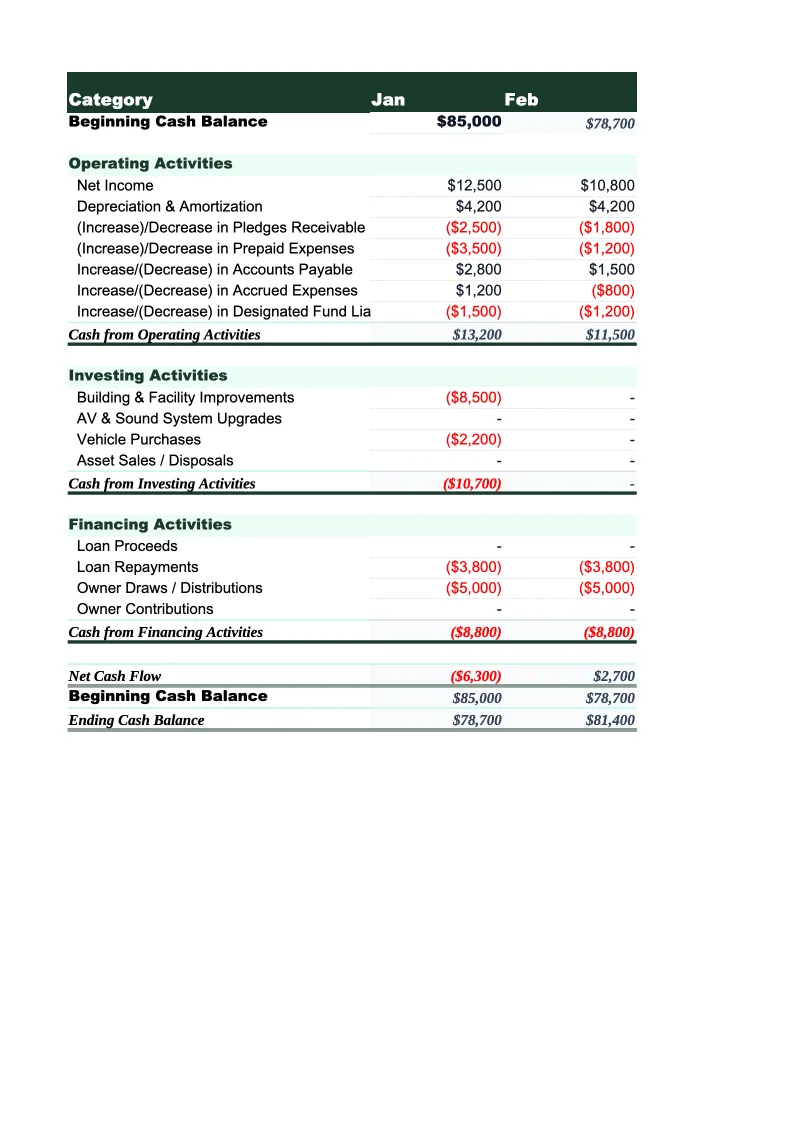
Church Cash Flow Template
Track your church's cash position through seasonal giving cycles, year-end surges, and ongoing ministry expenses with a cash flow template built for religious organizations.
What's Inside This Church Cash Flow Template
This template includes 5 worksheets, each designed for a specific part of your church financial workflow:
13-Week Cash Flow
A rolling 13-week projection of cash inflows and outflows broken down by week — the most practical planning horizon for churches navigating the gap between seasonal giving peaks and steady operating expenses.
Monthly Cash Flow
A 12-month cash flow view that maps your full fiscal year, whether your church runs January–December or a July–June ministry year.
Giving & Income Tracker
A dedicated sheet for tracking expected giving commitments, pledge campaigns, major donor patterns, and recurring income sources over the next 12 months.
Annual Cash Flow Statement
A formal cash flow statement structured for elder board presentations, finance committee review, and denominational reporting.
Dashboard
A single-page visual summary showing current cash balance, months of operating reserves, total projected giving for the next 90 days, and a bar chart of monthly cash inflows versus outflows across the fiscal year.
Church Cash Flow Template Features
- 13-week rolling cash flow with church-specific inflow categories (tithes, offerings, facility rental, school tuition)
- Giving and income tracker with pledge commitments, rental agreements, and year-over-year comparison
- 12-month fiscal year view covering both calendar-year and July–June ministry year churches
- Formal annual cash flow statement structured for elder board and denominational reporting
- Operating reserve months, personnel cost %, and facilities cost % calculated automatically
- Visual dashboard with monthly giving chart, cash balance trend, and key ministry finance metrics
How to Use This Church Cash Flow Spreadsheet
Start with the 13-Week Cash Flow sheet. Download the file and open it in Excel or Google Sheets — no macros or plugins required. Enter your current operating cash balance in the starting balance cell, then fill in expected inflows for the next 13 weeks: projected weekly offering totals based on your trailing 4-week average, any scheduled facility rental payments, school tuition receipts, and known special offerings. Most church treasurers can complete this initial setup in 20–30 minutes using recent bank statements and a giving report from their church management software.
Next, set up the Giving & Income Tracker. Enter every recurring income stream — active facility rental agreements with payment dates, school tuition schedules, capital campaign pledge commitments, and any large donors who give on a predictable pattern. This step often reveals the shape of your year more clearly than anything else: you'll see which months your income naturally concentrates, which months you're relying on giving momentum to hold steady, and where a slow week or two would put you below a comfortable cash threshold. Update the tracker as pledges are fulfilled or rental agreements change.
15 minutes from download to your first cash flow projection
Download the template, enter your giving schedule and ministry expenses, and see your church's full cash position across the year — seasonal cycles and all.
Why Every Church Needs a Cash Flow Template
Churches face a cash management challenge that most organizations don't: their primary income source — weekly giving — is highly sensitive to attendance, and attendance is seasonal. Easter and Christmas weekend offerings can run 2–4x a typical Sunday. Summer months routinely see 10–20% attendance declines, which compounds into real cash shortfalls when July and August giving falls below the monthly expense run rate. A church with $600K in annual giving can carry $50K in monthly expenses year-round but only bring in $35–40K during a slow summer month. Without a cash flow projection, that gap shows up as a surprise bank balance rather than a known and managed period.
The financial metrics that matter most for church health are specific to religious organizations. Operating reserve months — unrestricted cash divided by monthly operating expenses — is the primary indicator that church finance consultants and denominational advisors look at first. Two months of reserves is widely considered the minimum; three to six months is healthy. Personnel cost as a percentage of total spending is the second key ratio: most healthy churches spend 45–55% of their total budget on staff compensation. When that number climbs above 60%, it signals that ministry program spending is being squeezed. Facilities cost typically runs 15–25% of budget — manageable unless debt service on a building project pushes it higher.
Church Industry at a Glance
Financial templates built for churches and religious organizations — facility rentals, ceremony fees, staff payroll, and ministry budgets.
Revenue Drivers
- Tithes and weekly offerings
- Facility rental income
- Special offerings (Christmas, Easter)
- School and childcare tuition
- Cemetery and memorial service fees
Key Cost Categories
- Personnel and housing allowance
- Facilities and occupancy
- Worship and ministry programs
- Missions and benevolence
- Administration and software
- Debt service
Typical Margins
Gross: N/A · Net: 0-5% operating surplus
Seasonality
Giving peaks at Christmas and Easter; summer typically sees 10-20% attendance and giving decline. Year-end giving surge in December is common for tax purposes.
Key Performance Indicators
Church Cash Flow Template FAQ
More Church Templates
Church Balance Sheet Template for Excel
$29
Church Budget Template for Excel
$29
Church Budget & Financial Plan Template for Excel
$39
Church Expense Tracker Template for Excel
$29
Church Financial Model Template for Excel
$29
Church Income Statement Template for Excel
$29
Church Invoice Template for Excel
$29
Church KPI Dashboard Template for Excel
$29
Church P&L Template for Excel
$29
Church Pro Forma Template for Excel
$29
Church Project Budget Template for Excel
$29
Church Revenue Forecast Template for Excel
$29
Church Valuation Template for Excel
$29
Church Cash Flow Template
$29