Veterinary Business Plan Template
Build a complete financial roadmap for your veterinary practice with startup costs, patient assumptions, and 3-year P&L projections — pre-built for small animal, large animal, or mixed veterinary clinics.
What's Inside This Veterinary Business Plan Template
This template includes 5 worksheets, each designed for a specific part of your veterinary financial workflow:
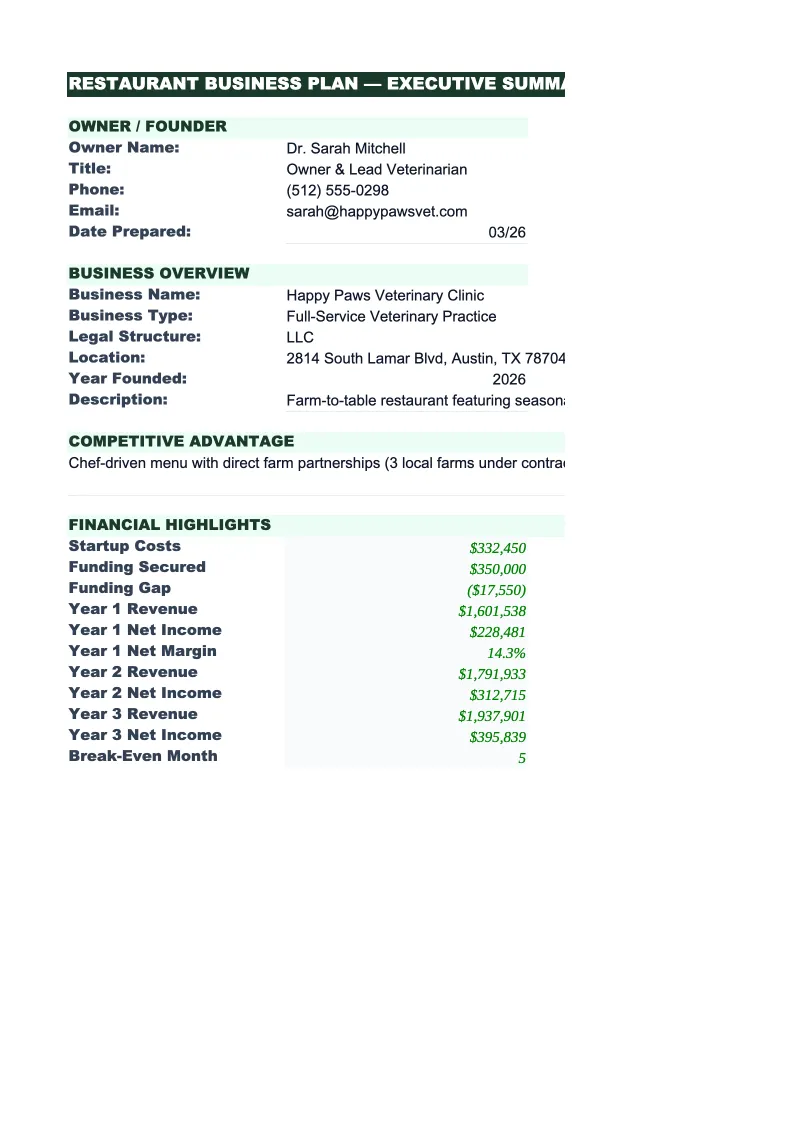
Executive Summary
A one-page overview of your veterinary practice showing your service offerings (wellness, surgery, dentistry, emergency, large animal, exotic), target market (pets, farm animals, both), and key financial metrics.
Startup Costs & Funding
A detailed tracker for your initial investment including facility lease or purchase, medical equipment and surgical suite, pharmacy and supplies inventory, diagnostic equipment (X-ray, ultrasound, lab), point-of-sale and medical records software, veterinary licenses and permits, staff training, and working capital.
Revenue Forecast
Projects monthly revenue based on number of patient appointments, average revenue per visit, and service mix (wellness exams, surgery, dentistry, boarding, grooming if offered).
Projected P&L
Annual and monthly profit & loss statement showing revenue, cost of goods sold (medications and supplies, medical disposables, boarding costs if applicable), gross profit, and operating expenses (staff salaries/wages, facility rent/utilities, license and liability insurance, medical equipment maintenance, office supplies, marketing).
Dashboard
A visual overview of key metrics including total revenue, profit, appointments per month, average revenue per appointment, gross margin, revenue per veterinarian per month, break-even analysis, and profitability timeline.
Veterinary Business Plan Features
- Startup costs for facility, medical equipment, pharmacy, software, licenses, and working capital
- Revenue model based on appointment volume, average fee per visit, and service mix
- Seasonal ramp schedule—veterinary practices grow 6–12 months before reaching capacity
- Payroll and staff cost tracking (critical for veterinary practices)
- 3-year P&L with EBITDA and net margin showing path to profitability
- Break-even analysis showing appointment volume and fees needed to cover fixed costs
How to Use This Business Plan Spreadsheet
Start with the Startup Costs sheet and list every expense: facility (lease deposit, renovations, or purchase—$40,000–$150,000), medical equipment (surgery table, surgical lights, monitoring equipment—$15,000–$50,000), diagnostic equipment (X-ray, ultrasound, lab equipment—$20,000–$60,000), pharmacy and supplies ($5,000–$15,000 initial inventory), point-of-sale and medical records software ($2,000–$10,000 setup, $500–$2,000/month ongoing), veterinary license and permits ($500–$2,000), staff training ($3,000–$10,000), insurance ($3,000–$8,000/year), and 4–6 months working capital ($20,000–$40,000). Total ranges $150,000–$500,000 depending on facility size and equipment level. Most new veterinarians partner with existing practices first or secure SBA loans for startup capital.
Move to the Revenue Forecast sheet and set your assumptions: how many appointments per month you expect in month one (typically 30–50 for a new practice), how you'll ramp to mature capacity (100–150+ appointments/month by month 12), and your average revenue per appointment by service type. Wellness exams: $50–$150. Vaccinations: $20–$50 per vaccine. Surgery (spay/neuter, etc.): $300–$1,500. Dental cleaning: $200–$800. Emergency visits: $150–$500. Boarding: $20–$60/night. Most practices generate 50–60% of revenue from exams and wellness, 25–30% from surgery, 10–20% from other services. Once you set appointment volume and fees, revenue builds automatically.
From launch to investor-ready business plan in one sitting
Enter your startup costs, facility choice, average appointment fee, and patient targets—the model projects your 3-year revenue, profitability, and cash runway automatically.
Why Veterinary Practices Need a Business Plan
Veterinary practices are knowledge-based service businesses with high startup costs and significant payroll obligations. Unlike other service businesses, the veterinarian is the primary driver of revenue through appointments and medical expertise. Your profitability depends on: appointment volume (patients per month), average revenue per appointment, cost of medications and supplies, and payroll efficiency. A small animal practice with 100 appointments per month at $120 average ($12,000/month revenue) needs payroll around $4,000–$6,000 (one veterinarian part-time plus support staff) to hit profitability. The critical calculation is revenue per veterinarian: $12,000/month per vet is unsustainable; $18,000+/month per vet is healthy and scalable.
The second major factor is the ramp timeline. Unlike retail businesses that can grow rapidly through marketing, a veterinary practice grows primarily through word-of-mouth referrals and reputation. Most new practices take 6–12 months to build patient base to 60–80% capacity, and 18–24 months to reach optimal capacity (100–150+ appointments per month). This means your business plan must account for lean first 12 months. Monthly overhead (rent, utilities, staff, insurance, loan payments) might be $5,000–$15,000 even with zero appointments. You need 12 months of working capital minimum, ideally 18 months. Many veterinarians work part-time at an existing practice in year one while building their own, or take venture capital partners.
Veterinary Industry at a Glance
Financial templates built for veterinary practices — from small animal clinics to multi-location hospitals. Pre-loaded with exam, surgery, pharmacy, and diagnostic categories.
Revenue Drivers
- Wellness exams and preventive care
- Surgical procedures
- Pharmacy and medication sales
- Diagnostics and lab work
- Dental procedures
- Emergency and urgent care
Key Cost Categories
- Medications and pharmaceuticals (COGS)
- Medical and surgical supplies
- Veterinarian salaries
- Technician and support staff wages
- Facility rent and utilities
- Diagnostic equipment and lab fees
Typical Margins
Gross: 74-78% · Net: 10-15%
Seasonality
Spring and fall peaks for wellness visits and heartworm testing; summer uptick in emergency visits; relatively stable year-round compared to many industries.
Key Performance Indicators
Veterinary Business Plan FAQ
More Veterinary Templates
Veterinary Practice Balance Sheet Template for Excel
$29
Veterinary Budget Template for Excel
$29
Veterinary Practice Cash Flow Template for Excel
$29
Veterinary Expense Tracker Template for Excel
$29
Veterinary Practice Financial Model Template for Excel
$29
Veterinary Income Statement Template for Excel
$29
Veterinary Invoice Template for Excel
$29
Veterinary Practice KPI Dashboard Template for Excel
$29
Veterinary Practice P&L Template for Excel
$29
Veterinary Pro Forma Template for Excel
$29
Veterinary Project Budget Template for Excel
$29
Veterinary Sales Forecast Template for Excel
$29
Veterinary Practice Valuation Template for Excel
$29
More Business Plan Templates
Veterinary Business Plan Template
$39