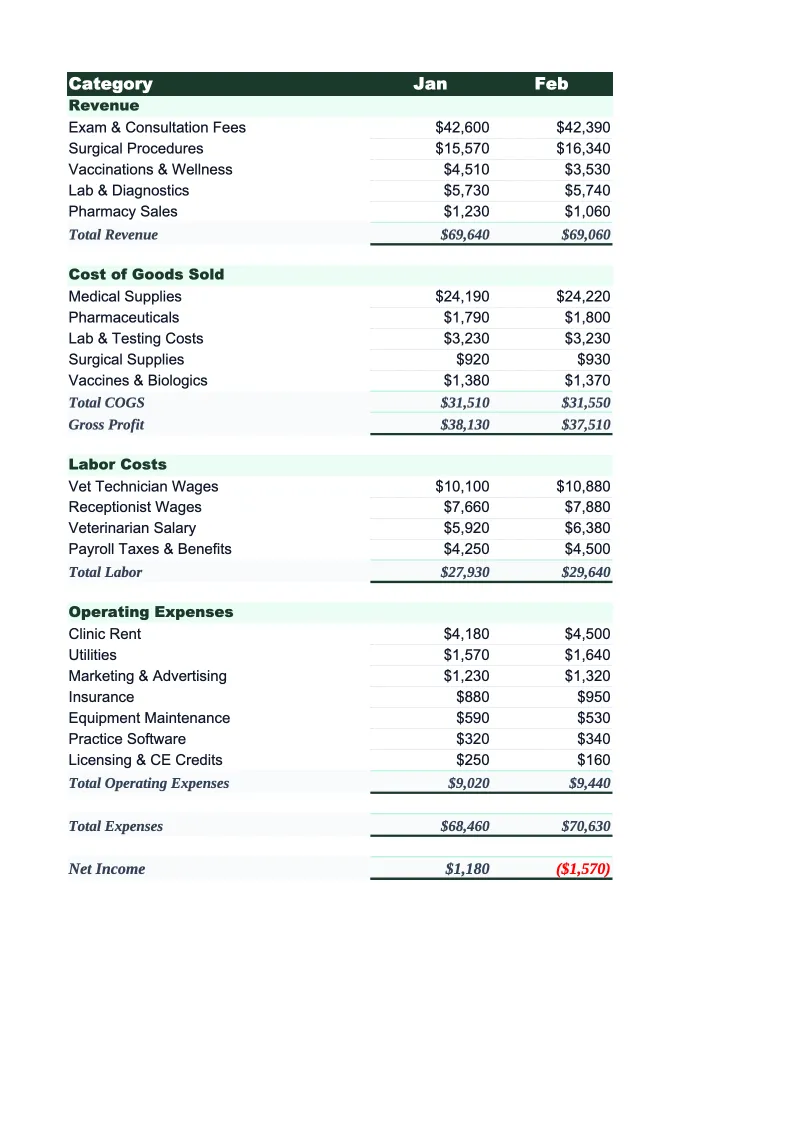
Veterinary Budget Template
Plan and track your veterinary practice's finances with a budget template built for clinics — pre-loaded with service, pharmacy, and diagnostic categories.
What's Inside This Veterinary Budget Template
This template includes 4 worksheets, each designed for a specific part of your veterinary financial workflow:
Monthly Budget
The core planning worksheet where you map out each month's revenue and expenses using categories built for veterinary practices.
Annual Summary
A 12-month view that consolidates data from each monthly sheet without any manual work.
Budget vs Actual
A variance tracking sheet where you enter your actual revenue and expenses alongside your budget and see the difference at the line-item level.
Dashboard
A one-page visual summary with pre-built charts and key practice metrics.
Veterinary Budget Template Features
- Revenue broken out by service line: exams, surgery, pharmacy, diagnostics, dental, emergency
- COGS tracking for medications, pharmaceuticals, and surgical supplies
- Labor split between veterinarians and support staff
- Monthly budget with 12-month annual rollup
- Budget vs actual variance tracking with color-coded alerts
- Visual dashboard with gross margin and payroll ratio calculations
How to Use This Veterinary Budget Spreadsheet
Download the .xlsx file and open it in Excel or Google Sheets — no macros or add-ins required. Start with the Monthly Budget sheet: review the pre-loaded revenue categories and adjust them to match your clinic's service mix. Most practices keep the default categories as-is and rename one or two line items to reflect a specialty, like exotic animal care or boarding. On the expense side, enter your actual veterinarian salaries and support staff wages, then work through COGS (pharmacy and supplies) and overhead. The first pass takes about 20 minutes if you have last month's P&L or bank statements nearby.
Once the structure looks right, enter your projected revenue and expenses for the current month and copy the format forward across all 12 months. Adjust for your clinic's seasonality — wellness and heartworm testing peak in spring and fall, emergency volume picks up in summer. As each month closes, open the Budget vs Actual sheet and enter your real figures. The sheet handles the math and highlights where you drifted from plan so you can investigate rather than just observe.
15 minutes from download to your first budget
Download the template, plug in your clinic's numbers, and see your practice's full financial picture — monthly budget, annual rollup, and variance tracking included.
Why Every Veterinary Practice Needs a Budget Template
Veterinary practices operate at gross margins that look healthy on paper — typically 74–78% — but those margins depend on tight control of two variables that can move fast: pharmacy and supply COGS, and veterinarian compensation. A practice doing $1.5M in annual revenue might spend $350,000 on medications and supplies. If that number drifts 2–3% higher than planned, it wipes out a meaningful share of net income in a business that already operates at 10–15% net margins. Most practice owners know roughly what they're spending, but without a structured budget, the detail-level tracking that would catch a problem early simply doesn't happen.
A well-structured veterinary budget breaks revenue into service categories because they behave differently. Wellness exams and preventive care are your most predictable revenue stream — client retention and annual visit rates drive it, and it responds well to reminders and loyalty programs. Surgical and dental procedures have higher revenue per transaction but lower volume and more scheduling variability. Pharmacy revenue is significant but carries its own COGS exposure. Diagnostics and lab work are increasingly important as in-house equipment expands. Budgeting each stream separately means you can set realistic targets for each and understand which parts of the business are driving growth — or decline.
Veterinary Industry at a Glance
Financial templates built for veterinary practices — from small animal clinics to multi-location hospitals. Pre-loaded with exam, surgery, pharmacy, and diagnostic categories.
Revenue Drivers
- Wellness exams and preventive care
- Surgical procedures
- Pharmacy and medication sales
- Diagnostics and lab work
- Dental procedures
- Emergency and urgent care
Key Cost Categories
- Medications and pharmaceuticals (COGS)
- Medical and surgical supplies
- Veterinarian salaries
- Technician and support staff wages
- Facility rent and utilities
- Diagnostic equipment and lab fees
Typical Margins
Gross: 74-78% · Net: 10-15%
Seasonality
Spring and fall peaks for wellness visits and heartworm testing; summer uptick in emergency visits; relatively stable year-round compared to many industries.
Key Performance Indicators
Veterinary Budget Template FAQ
More Veterinary Templates
Veterinary Practice Balance Sheet Template for Excel
$29
Veterinary Business Plan Template for Excel
$39
Veterinary Practice Cash Flow Template for Excel
$29
Veterinary Expense Tracker Template for Excel
$29
Veterinary Practice Financial Model Template for Excel
$29
Veterinary Income Statement Template for Excel
$29
Veterinary Invoice Template for Excel
$29
Veterinary Practice KPI Dashboard Template for Excel
$29
Veterinary Practice P&L Template for Excel
$29
Veterinary Pro Forma Template for Excel
$29
Veterinary Project Budget Template for Excel
$29
Veterinary Sales Forecast Template for Excel
$29
Veterinary Practice Valuation Template for Excel
$29
Veterinary Budget Template
$29