Veterinary Financial Model Template
Model revenue by service category — exams, surgery, pharmacy, and diagnostics — track COGS and staffing costs separately, and monitor the KPIs that determine veterinary practice profitability.
What's Inside This Veterinary Financial Model Template
This template includes 6 worksheets, each designed for a specific part of your veterinary financial workflow:
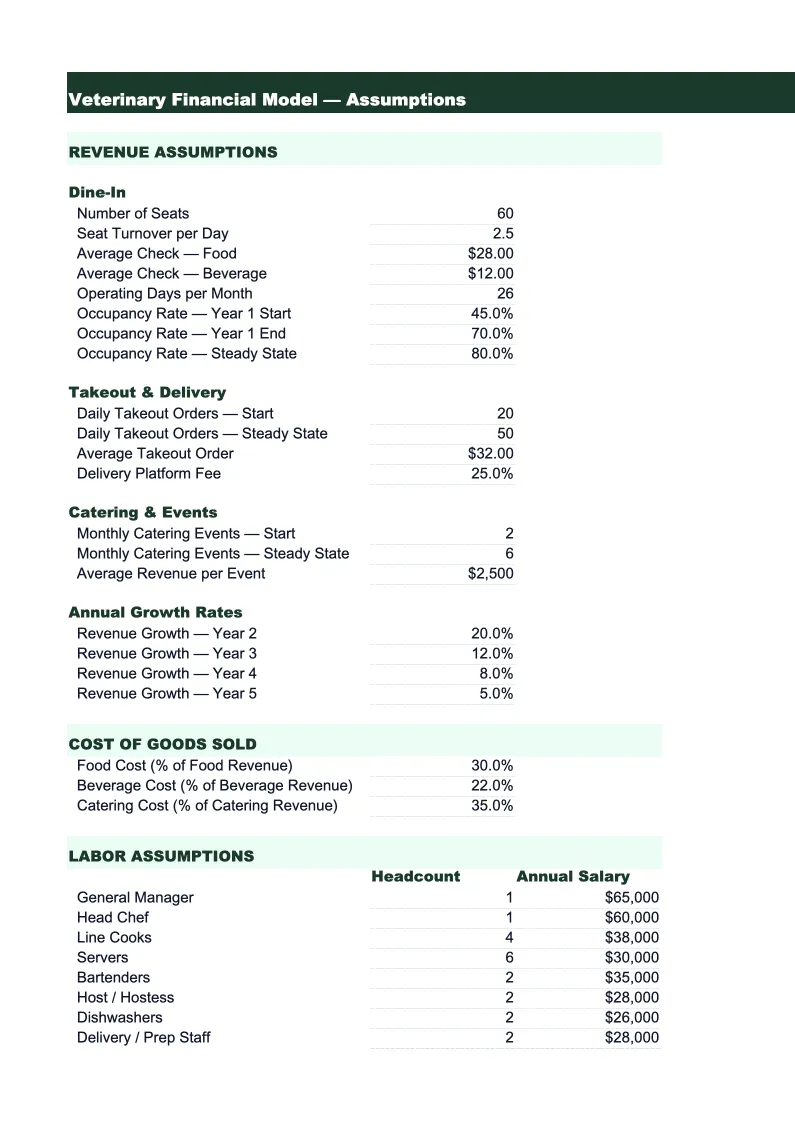
Assumptions
The control panel for the entire model.
Revenue Projections
Monthly revenue modeled by service category: wellness exams and preventive care (vaccines, heartworm testing, parasite prevention), medical consultations and sick visits, surgical procedures (soft tissue and orthopedic), dental cleanings and extractions, in-house pharmacy and medication dispensing, and in-house diagnostics (bloodwork, urinalysis, imaging).
COGS & Expense Forecast
A full monthly expense model that separates cost of goods sold (medications, vaccines, surgical supplies, and lab reagents) from operating expenses.
P&L Statement
A monthly income statement from gross revenue down to net income.
Cash Flow
Tracks your monthly cash position from opening balance through operating cash flows, equipment purchases, and debt service.
KPI Dashboard
A single-page summary of the metrics veterinary practice owners and consultants use to measure practice health.
Veterinary Financial Model Features
- Revenue model by service type: wellness exams, surgery, pharmacy, diagnostics, and dental
- COGS tracked separately by category — medications, surgical supplies, and lab reagents
- DVM staffing model with revenue per DVM hour calculated automatically each month
- Gross margin and overhead as % of revenue benchmarked against AVMA practice data
- Cash flow with capital expenditure modeling for diagnostic equipment purchases
- KPI dashboard with average client transaction, visits per DVM, and payroll % tracked automatically
How to Use This Veterinary Practice Financial Spreadsheet
Start with the Assumptions sheet — enter your current or projected visit volume, number of DVMs, and DVM hours per week. Then fill in your average transaction value for each service category: wellness visits, sick visits, surgical cases, dental procedures, pharmacy dispensing, and diagnostics. If you're modeling a new practice, use AVMA benchmarks as starting points and adjust as your data develops. If you're an existing practice, pull your last 12 months of practice management software reports for visit counts and average transaction values. The full setup takes about 20–25 minutes.
Once your revenue assumptions are set, work through the COGS and Expense Forecast sheet. COGS for pharmacy and consumables is already set as a percentage of revenue — review these percentages against your actual cost reports and adjust if your medication margins differ from the defaults. For staffing, confirm or update the DVM and technician salary figures, and enter your support staff headcount. Fixed overhead items like rent, utilities, and software subscriptions are entered once on the Assumptions sheet and carry forward automatically. After the expense sheet is set, the P&L, Cash Flow, and Dashboard build themselves.
20 minutes from download to your first veterinary practice financial model
Download the template, plug in your visit volume and service fees, and see your practice's full financial picture — revenue by service type, COGS, staffing costs, and cash flow.
Why Every Veterinary Practice Needs a Financial Model
Veterinary practices generate revenue across four distinct service categories — professional services, pharmacy, diagnostics, and procedures — each with different cost structures and margins. Professional service revenue (exams, consultations) is high-margin but directly constrained by DVM hours. Pharmacy revenue scales with patient volume but carries its own COGS in medications and vaccines. Diagnostics are largely equipment-dependent with high fixed costs and low variable costs per test. Without a financial model that separates these categories, practice owners can't see which service lines are actually profitable — and often discover too late that strong total revenue is masking a margin problem in pharmacy or an underperforming surgery schedule.
The two largest cost drivers in a veterinary practice are DVM compensation and support staff wages, which together typically represent 44–52% of revenue. Unlike a retail business where labor is largely variable, veterinary labor is a mix: DVMs are often on guaranteed salaries or production-based pay, while technicians and support staff are hourly. A financial model that doesn't separate these two categories will show the right total payroll cost but miss the management insight that matters most — whether the practice is efficient on a revenue-per-DVM-hour basis and whether support staff ratios are appropriate for the patient volume being served.
Veterinary Industry at a Glance
Financial templates built for veterinary practices — from small animal clinics to multi-location hospitals. Pre-loaded with exam, surgery, pharmacy, and diagnostic categories.
Revenue Drivers
- Wellness exams and preventive care
- Surgical procedures
- Pharmacy and medication sales
- Diagnostics and lab work
- Dental procedures
- Emergency and urgent care
Key Cost Categories
- Medications and pharmaceuticals (COGS)
- Medical and surgical supplies
- Veterinarian salaries
- Technician and support staff wages
- Facility rent and utilities
- Diagnostic equipment and lab fees
Typical Margins
Gross: 74-78% · Net: 10-15%
Seasonality
Spring and fall peaks for wellness visits and heartworm testing; summer uptick in emergency visits; relatively stable year-round compared to many industries.
Key Performance Indicators
Veterinary Financial Model Template FAQ
More Veterinary Templates
Veterinary Practice Balance Sheet Template for Excel
$29
Veterinary Budget Template for Excel
$29
Veterinary Business Plan Template for Excel
$39
Veterinary Practice Cash Flow Template for Excel
$29
Veterinary Expense Tracker Template for Excel
$29
Veterinary Income Statement Template for Excel
$29
Veterinary Invoice Template for Excel
$29
Veterinary Practice KPI Dashboard Template for Excel
$29
Veterinary Practice P&L Template for Excel
$29
Veterinary Pro Forma Template for Excel
$29
Veterinary Project Budget Template for Excel
$29
Veterinary Sales Forecast Template for Excel
$29
Veterinary Practice Valuation Template for Excel
$29
More Financial Model Templates
Veterinary Financial Model Template
$29