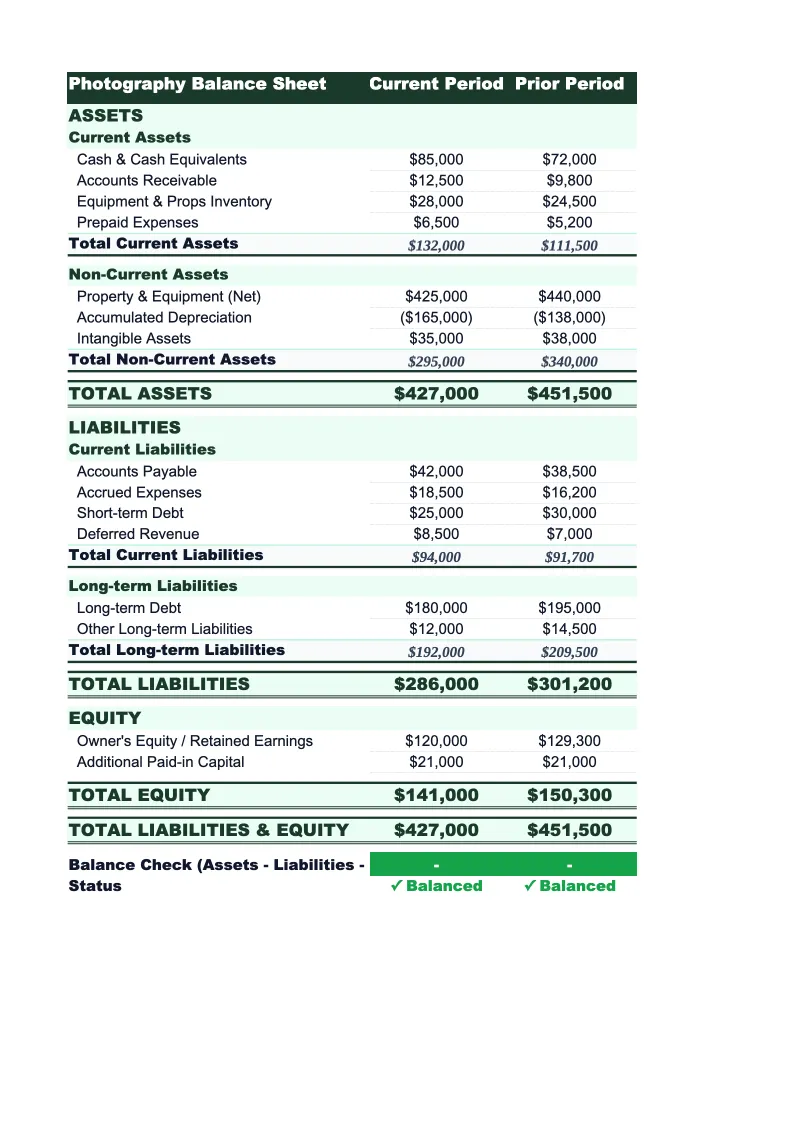
Photography Balance Sheet Template
See exactly what your photography business owns, owes, and is worth — a balance sheet built for photographers with camera equipment depreciation schedules, client accounts receivable, print lab payables, and studio asset tracking.
What's Inside This Photography Balance Sheet Template
This template includes 4 worksheets, each designed for a specific part of your photography financial workflow:
Balance Sheet
The core financial statement organized around the photography business chart of accounts.
Equipment Register
A fixed-asset register tracking every major piece of photography equipment and technology the business owns.
Client AR
An accounts receivable tracker for outstanding client balances — unpaid session fees, uncollected print and product orders, and any digital download packages that haven't been invoiced or paid.
Period Comparison
A side-by-side view of two balance sheet periods — typically the current year-end against the prior year-end, or quarter-over-quarter if you update the balance sheet more frequently.
Photography Balance Sheet Template Features
- Equipment register with category-level depreciation schedules for cameras, lenses, lighting, and computers
- Client AR tracker with aging buckets (30/60/90+ days) feeding directly into balance sheet current assets
- Deferred revenue line item for deposits collected on sessions not yet delivered
- Software subscription and insurance tracked as prepaid expenses in current assets
- Accounting equation check — automatically flags any asset/liability imbalance
- Period-over-period comparison for lender applications and annual financial reviews
How to Use This Photography Balance Sheet Spreadsheet
Start with the Equipment Register before filling in anything else. List every piece of gear and technology you own: camera bodies, lenses, lighting and modifiers, computers, monitors, studio furniture, and any other equipment purchased for the business. Use your original purchase receipts or credit card records to enter the actual cost and date for each item. The sheet handles the depreciation math — most photography equipment depreciates over five to seven years using the straight-line method — and calculates net book value per item and category totals that flow into the balance sheet automatically. If you've had equipment for years and never tracked depreciation, your accountant can provide the accumulated depreciation figures from prior tax returns.
Next, populate the Client AR sheet with any outstanding invoices or open client balances, and note any deposits you've collected for sessions not yet delivered. Then complete the balance sheet's remaining sections: pull cash and bank balances from your bank statement, prepaid expenses from your insurance and software subscription schedules, and payables from your print lab invoices and vendor balances. If you carry any equipment financing or business credit card balances, those go into the liabilities section. The template organizes these into the standard current and non-current classifications that lenders and accountants expect to see.
15 minutes from download to your first photography balance sheet
Download the template, log your equipment and client balances, and see your photography business's full financial position — gear value, outstanding invoices, deposits owed, and owner's equity included.
Why Every Photography Business Needs a Balance Sheet
Most photographers track bookings and income closely but have no clear picture of what the business is actually worth. The income statement tells you how much you earned last year; the balance sheet tells you whether that income built any lasting equity or got drawn out as fast as it came in. Photography businesses carry real, depreciable assets — a working kit of cameras, lenses, and lighting can represent $20,000 to $80,000 or more in equipment — and most photographers have never put a depreciated value on any of it. Without a balance sheet, you're running a business without knowing its net worth, which makes conversations with lenders, potential partners, or even your own accountant harder than they need to be.
Two items on a photography balance sheet are most often missing or wrong. The first is equipment depreciation: cameras and lenses don't hold their original purchase value, and the IRS doesn't let you count them as if they do. A camera body purchased three years ago for $3,500 might have a net book value closer to $1,500 after depreciation — that's the number that belongs on your balance sheet, not the original cost. The second is deferred revenue from client deposits: when a client pays a $500 booking deposit for a wedding nine months away, that's not income you've earned yet. It's a liability — a service you owe — and it belongs on the liabilities side of the balance sheet until the session is delivered and the final gallery is sent.
Photography Industry at a Glance
Financial templates built for photographers and photography studios — from solo portrait photographers to commercial studios. Pre-loaded with session fees, licensing line items, print product categories, and industry-standard KPIs.
Revenue Drivers
- Session bookings
- Print & product sales
- Image licensing fees
- Digital download packages
- Second shooter add-ons
Key Cost Categories
- Equipment purchase & depreciation
- Editing software subscriptions
- Gallery delivery platform fees
- Studio rent
- Lab & printing costs (COGS)
- Equipment & liability insurance
- Marketing & advertising
- Travel & location expenses
Typical Margins
Gross: 50-70% · Net: 15-35%
Seasonality
Peak seasons: spring (April–June) and fall (September–November) for portraits and weddings. December busy for holiday portraits. January–February typically slowest.
Key Performance Indicators
Photography Balance Sheet Template FAQ
More Photography Templates
Photography Budget Template for Excel
$29
Photography Business Plan Template for Excel
$39
Photography Cash Flow Template for Excel
$29
Photography Expense Tracker Template for Excel
$29
Photography Financial Model Template for Excel
$29
Photography Income Statement Template for Excel
$29
Photography Invoice Template for Excel
$29
Photography KPI Dashboard Template for Excel
$29
Photography P&L Template for Excel
$29
Photography Business Pro Forma Template for Excel
$29
Photography Project Budget Template for Excel
$29
Photography Sales Forecast Template for Excel
$29
Photography Business Valuation Template for Excel
$29
More Balance Sheet Templates
Photography Balance Sheet Template
$29