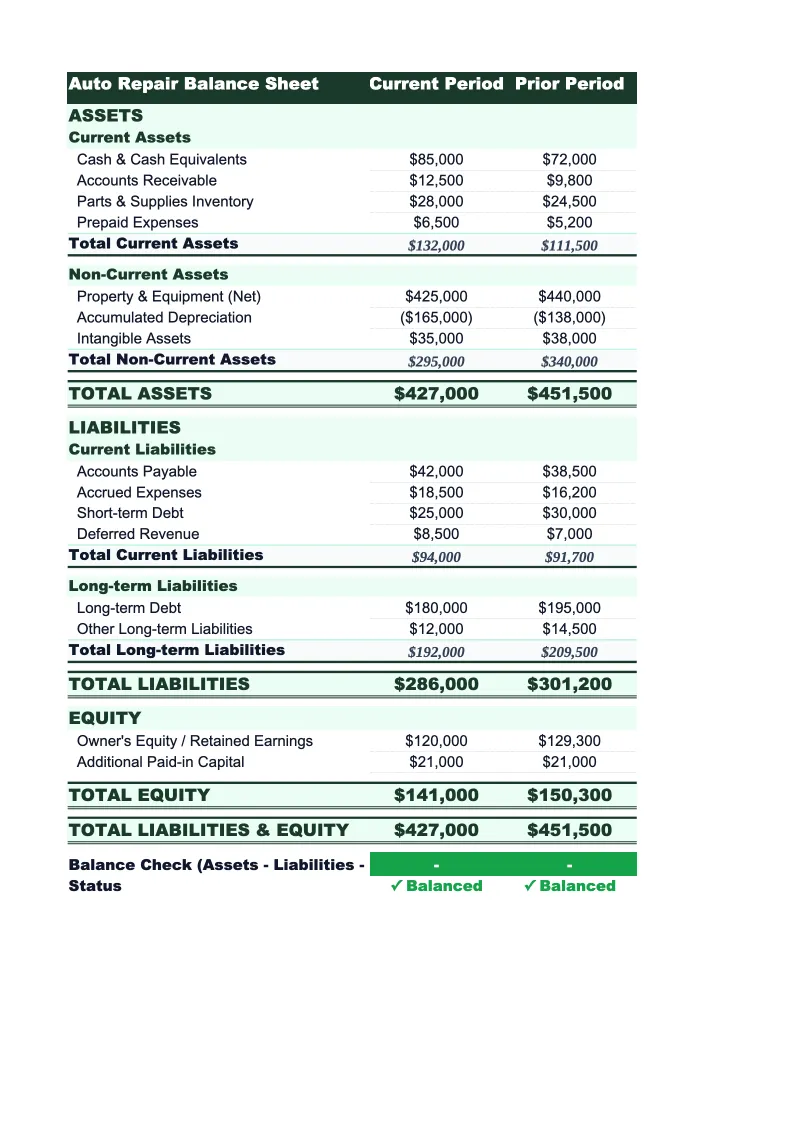
Auto Repair Balance Sheet Template
Track your auto repair shop's financial position with a balance sheet built for the trades — parts inventory, equipment financing, fleet receivables, and equity all in one place.
What's Inside This Auto Repair Balance Sheet Template
This template includes 4 worksheets, each designed for a specific part of your auto repair financial workflow:
Balance Sheet
The core worksheet showing your shop's financial position on a given date.
Period Comparison
Side-by-side view of your balance sheet across two periods — current month versus prior month, or this year versus last.
Working Capital
A focused view of your shop's short-term liquidity — current assets minus current liabilities — with your current ratio and quick ratio calculated automatically.
Parts Inventory
A detailed tracker for the parts and materials sitting on your shelves, which often represent the largest single asset on an auto repair shop's balance sheet.
Auto Repair Balance Sheet Template Features
- Pre-built current assets section with accounts receivable split between insurance and fleet accounts
- Parts inventory tracker by category — oil, brakes, filters, tires, and more — with auto-calculated total
- Equipment and lift financing tracked as long-term liability with current portion split out
- Period-over-period comparison with dollar and percentage change for every line
- Working capital, current ratio, and quick ratio calculated automatically
- Parts inventory detail sheet that feeds directly into the balance sheet asset total
How to Use This Auto Repair Balance Sheet Spreadsheet
Download the .xlsx file and open it in Excel or Google Sheets — no macros or plugins required. Start with the Balance Sheet tab: review the pre-loaded categories and adjust any line items that don't reflect your shop's setup. Most shops keep the standard structure and add lines for specific assets like a company vehicle or a specialty tool purchase. The initial setup takes about 20–30 minutes, mostly spent pulling balances from your bank statements, accounting software, and parts supplier account summaries.
Enter your current balances starting with the easy ones: cash in the operating account, total outstanding receivables from insurance companies or fleet customers, and your current supplier payables. Then move to the Parts Inventory tab and enter stock on hand by category — this takes the most time the first time, but gives you the most accurate asset figure. Equipment and loan balances come from your financing statements. The sheet checks that everything balances automatically; if assets don't match liabilities plus equity, there's a missing entry to track down.
20 minutes from download to your first balance sheet
Download the template, enter your balances, and see your shop's full financial position — parts inventory, equipment debt, receivables, and equity all in one place.
Why Auto Repair Shops Need a Balance Sheet Template
Auto repair shops sit in an unusual financial position: high gross margins on labor but significant capital tied up in equipment and parts inventory. A shop generating $800,000 a year might have $60,000 in parts on shelves, $120,000 in lift and equipment financing, and receivables from insurance claims that take 30–45 days to collect — none of which shows up clearly on a cash-basis income statement. Without a balance sheet, shop owners often underestimate how much capital the business actually requires and overestimate how much is available to pull out as owner draws.
The balance sheet categories that matter most for auto repair shops differ from generic templates. Parts inventory is a real asset that most generic spreadsheets ignore or lump into a single line. Equipment financing needs to be split between current and long-term portions, because the current portion affects your working capital ratio. Accounts receivable deserves its own breakdown between retail customers (typically pay same day), insurance companies (30–45 day cycles), and commercial fleet accounts (net-30 terms). Getting these distinctions right gives you a cleaner picture of what you actually own versus what the bank owns, and what's collectible in the next 30 days versus over the year.
Auto Repair Industry at a Glance
Financial templates built for auto repair shops — from single-bay independents to multi-location service centers. Pre-loaded with labor, parts, and overhead categories specific to the automotive service industry.
Revenue Drivers
- Labor (repair services)
- Parts sales
- Oil changes & maintenance
- Diagnostics & inspections
- Tire sales
- Shop supplies fees
Key Cost Categories
- Parts & materials (COGS)
- Technician labor
- Rent & occupancy
- Equipment & tools
- Utilities
- Insurance
- Marketing & advertising
- Shop supplies
Typical Margins
Gross: 50-60% · Net: 5-15%
Seasonality
Busiest in summer (June–August) and spring (March–May) for maintenance and travel prep; January–February are consistently the slowest months.
Key Performance Indicators
Auto Repair Balance Sheet Template FAQ
More Auto Repair Templates
Auto Repair Shop Budget Template for Excel
$29
Auto Repair Shop Business Plan Template for Excel
$39
Auto Repair Shop Cash Flow Template for Excel
$29
Auto Repair Expense Tracker Template for Excel
$29
Auto Repair Financial Model Template for Excel
$29
Auto Repair Income Statement Template for Excel
$29
Auto Repair Invoice Template for Excel
$29
Auto Repair KPI Dashboard Template for Excel
$29
Auto Repair P&L Template for Excel
$29
Auto Repair Shop Pro Forma Template for Excel
$29
Auto Repair Shop Project Budget Template for Excel
$29
Auto Repair Sales Forecast Template for Excel
$29
Auto Repair Shop Valuation Template for Excel
$29
More Balance Sheet Templates
Auto Repair Balance Sheet Template
$29