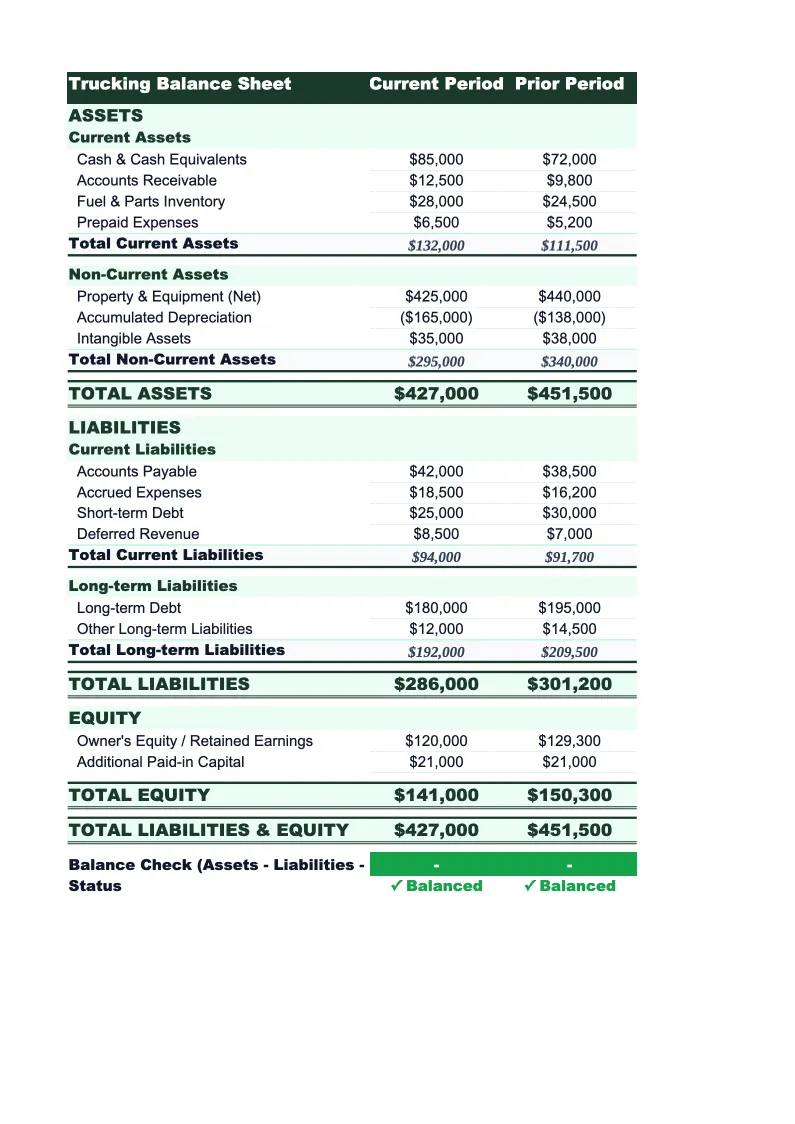
Trucking Balance Sheet Template
See exactly what your trucking company owns, owes, and is worth — with a balance sheet built around fleet assets, equipment loans, and freight industry financials.
What's Inside This Trucking Balance Sheet Template
This template includes 4 worksheets, each designed for a specific part of your trucking financial workflow:
Balance Sheet
The main worksheet showing your trucking company's financial position at a point in time.
Equipment Schedule
A detailed ledger of every truck and trailer in your fleet.
Period Comparison
A side-by-side view of your balance sheet across up to four periods — quarters or year-end snapshots.
Key Ratios
Auto-calculated financial ratios drawn from the Balance Sheet.
Trucking Balance Sheet Template Features
- Fleet asset tracking with per-unit book value and loan balance
- Current vs non-current classification for assets and liabilities
- Equipment schedule that feeds directly into the main balance sheet
- Period comparison view for up to four quarters or year-end snapshots
- Auto-calculated ratios: current ratio, debt-to-equity, working capital
- Accounts receivable section structured for freight broker and direct shipper payments
How to Use This Trucking Balance Sheet Spreadsheet
Download the .xlsx file and open it in Excel or Google Sheets — no macros or plugins required. Start with the Equipment Schedule sheet: enter each truck and trailer you own or are financing, along with the purchase price, accumulated depreciation, and current loan balance. This step feeds the non-current assets and long-term liabilities sections of the main Balance Sheet, so getting it right first saves you from adjusting the same numbers twice. Most owner-operators have this done in under 20 minutes.
Move to the Balance Sheet sheet and fill in the remaining figures: cash on hand and in checking, accounts receivable from open freight loads, any prepaid expenses like annual permits or insurance deposits, accounts payable to fuel vendors and repair shops, and any current-portion loan payments due in the next 12 months. The equity section calculates automatically. If your total assets don't equal total liabilities plus equity, the template will flag the discrepancy so you can find the missing entry.
15 minutes from download to your first balance sheet
Download the template, enter your fleet assets and loan balances, and see your trucking company's true financial position — equity, debt ratios, and all.
Why Every Trucking Company Needs a Balance Sheet Template
Trucking is one of the most capital-intensive small businesses you can run. A single Class 8 tractor costs $150,000–$200,000 new, and most operators finance multiple units simultaneously — which means the balance sheet is where your actual financial health lives. Revenue figures tell you how much freight you're moving, but the balance sheet tells you whether you're building equity or just servicing debt. Owner-operators who skip this step often don't realize they're underwater on equipment until they try to refinance or sell.
A proper trucking balance sheet structures assets and liabilities the way lenders and accountants expect to see them. Current assets should include cash, accounts receivable from brokers and shippers (broken out from factored versus unfactored receivables if applicable), fuel inventory on hand, and prepaid permits or insurance. Non-current assets are your tractors, trailers, and any shop equipment, each at net book value after depreciation. Liabilities follow the same split: current includes the next 12 months of loan payments, fuel card balances, and payables to vendors; long-term is the remaining equipment financing. The difference is owner's equity — what the business is actually worth.
Trucking Industry at a Glance
Financial templates built for trucking companies and owner-operators — pre-loaded with freight billing, fuel surcharge, and per-mile cost categories.
Revenue Drivers
- Linehaul freight rates
- Fuel surcharge revenue
- Accessorial charges
- Dedicated contract lanes
Key Cost Categories
- Driver wages & settlements
- Fuel
- Maintenance & repairs
- Insurance (liability, cargo, physical damage)
- Equipment payments & depreciation
- Permits & compliance fees
Typical Margins
Gross: 12-20% · Net: 2.5-8%
Seasonality
Peak freight volumes in August–October (back-to-school and holiday restocking) and late November–December. Slowest in January–March post-holiday.
Key Performance Indicators
Trucking Balance Sheet Template FAQ
More Trucking Templates
Trucking Budget Template for Excel
$29
Trucking Business Plan Template for Excel
$39
Trucking Cash Flow Template for Excel
$29
Trucking Expense Tracker Template for Excel
$29
Trucking Financial Model Template for Excel
$29
Trucking Income Statement Template for Excel
$29
Trucking Invoice Template for Excel
$29
Trucking KPI Dashboard Template for Excel
$29
Trucking P&L Template for Excel
$29
Trucking Pro Forma Template for Excel
$29
Trucking Project Budget Template for Excel
$29
Trucking Sales Forecast Template for Excel
$29
Trucking Company Valuation Template for Excel
$29
More Balance Sheet Templates
Trucking Balance Sheet Template
$29