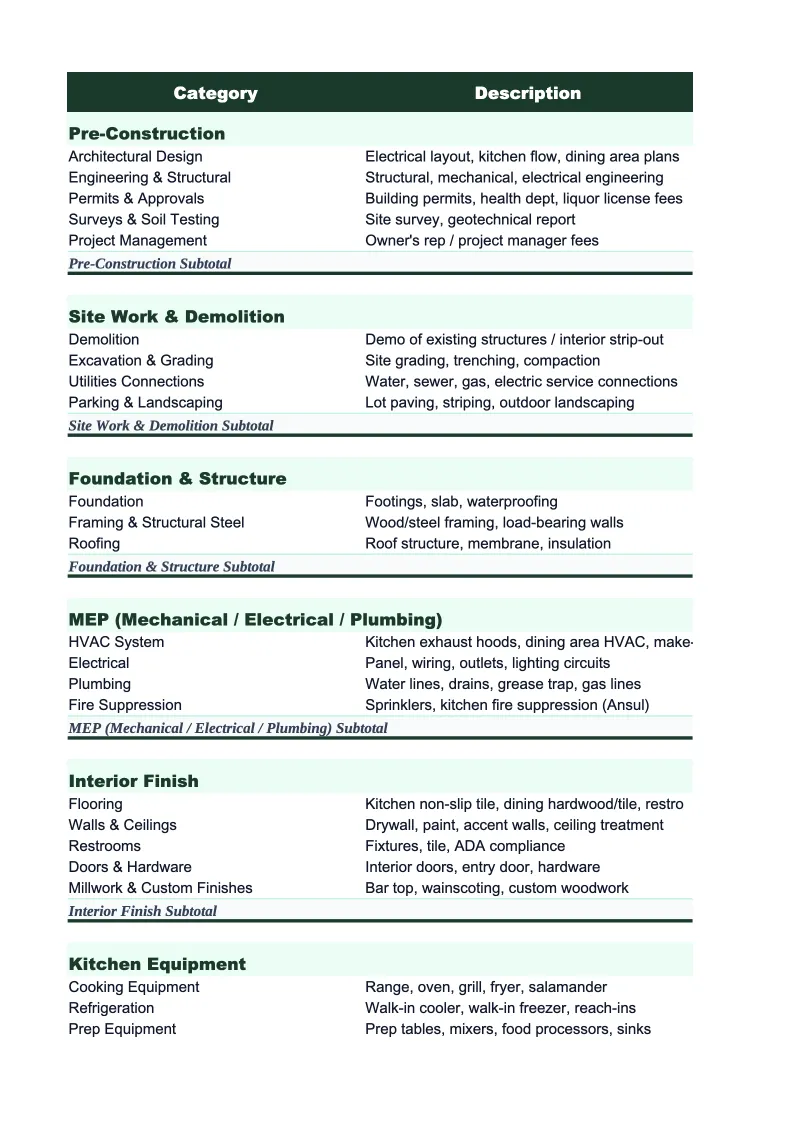
Electrical Project Budget Template
Plan and track every cost of growing your electrical contracting business — new trucks, tools, licensing, crew onboarding, and lead generation — with estimated vs actual tracking built in.
What's Inside This Electrical Project Budget Template
This template includes 6 worksheets, each designed for a specific part of your electrical financial workflow:
Project Summary
A single-page overview of the entire capital project — whether you're adding a second crew, purchasing a new service truck and tool inventory, expanding into commercial work, or launching a service agreement program.
Vehicles & Equipment
Tracks all vehicle and field equipment costs for the project.
Licensing & Insurance
Covers every licensing, bonding, and insurance cost required to operate legally in a new market or scope of work.
Crew & Training
Captures the costs of recruiting, onboarding, and equipping a new journeyman or apprentice.
Marketing & Lead Gen
Tracks the upfront marketing and lead acquisition costs required to keep a new crew or expanded service capacity booked.
Budget vs Actual
A consolidated summary that pulls estimated and actual cost totals from every category sheet and calculates dollar and percentage variance for each.
Electrical Project Budget Template Features
- Vehicles and equipment tracker with service truck, racking, conduit benders, wire pullers, and panel tools
- Licensing and insurance budget with contractor license fees, surety bond, and workers comp deposit tracking
- Crew onboarding tracker with recruitment, OSHA training, NFPA 70E PPE, and tool set costs per hire
- Marketing and lead gen budget with vehicle wrap, Google Ads, HomeAdvisor, and commercial outreach line items
- Estimated vs actual variance tracking with color-coded overrun flagging per category
- Project summary dashboard with committed spend and remaining budget across all cost areas
How to Use This Electrical Project Budget Spreadsheet
Start with the Project Summary sheet and define your project scope — new crew launch, service truck addition, commercial division entry, or market expansion — along with your target start date and total budget. This sheet pulls totals from the Vehicles, Licensing, Crew, and Marketing sheets automatically so you see your full cost position without manual math. Then open each category sheet and review the pre-loaded line items. Keep what applies to your project, rename or delete what doesn't, and add rows for costs specific to your situation. A residential service company adding its first journeyman crew has different line items than an established shop moving into commercial construction work, and the template is structured to accommodate both.
As you get quotes, place orders, and make deposits, enter actual costs and vendor names alongside your estimates. The Budget vs Actual sheet updates in real time and highlights any category running over plan. Electrical projects frequently see surprises in insurance — moving into commercial work often requires higher general liability limits ($2M per occurrence is common for commercial GC requirements), and adding employees triggers a workers compensation payroll audit that can adjust your premium mid-year. Catching a $3,500 insurance differential during planning is a coverage decision; discovering it after you've equipped a new truck and hired a journeyman creates pressure at exactly the wrong point in the project.
15 minutes from download to your first project budget
Download the template, enter your project scope, and see your full cost picture — vehicles, licensing, crew, and marketing costs tracked in one place.
Why Electrical Contractors Need a Project Budget Template
Growing an electrical contracting company is a capacity and pipeline problem. Every crew you add raises your revenue ceiling, but it also adds a layer of fixed costs — a service truck, full tool complement, insurance premium increase, licensing coverage, and the payroll of a journeyman and apprentice — that you carry even in slow weeks and during the January–February trough that most electrical markets experience. Contractors who track expansion costs know exactly what it costs to put a productive crew on the road, how many service calls or project hours per week that crew needs to cover its own overhead, and what the payback period looks like at their average ticket. Contractors who don't often find out six months in that a crew they believed was contributing to profit is merely covering its own cost base.
The costs that get omitted most often in electrical expansion budgets are the compliance and licensing items that feel small individually but add up fast. The truck is the visible line item, but the full cost to deploy a crew also includes the rack and shelving system, conduit bender set, wire puller, panel labeling equipment, arc flash PPE per worker, NFPA 70E training, OSHA certification, and the surety bond adjustment. Licensing deserves its own tracking sheet because requirements in the electrical trades vary significantly by state and by job type — some states require both a master electrician license and a separate electrical contractor license, commercial GCs often require $2M–$5M general liability limits that exceed residential policy defaults, and adding employees triggers workers compensation class code changes that can move your rate meaningfully if your existing modifier is below 1.0. Budgeting these items before any commitments are made prevents the scenario where a crew is hired and equipped but can't legally pull permits on the first commercial project.
Electrical Industry at a Glance
Financial templates built for electrical contractors — from solo electricians to multi-crew commercial shops. Pre-loaded with labor, materials, and overhead categories specific to the electrical trades.
Revenue Drivers
- Residential service calls
- Commercial project contracts
- New construction installs
- Panel upgrades
- Maintenance & service agreements
- Material markups
Key Cost Categories
- Materials & wire
- Labor (journeymen & apprentices)
- Permits & inspection fees
- Vehicle & fuel
- Tools & equipment
- Insurance & bonding
- Subcontractors
- Overhead & office
Typical Margins
Gross: 35-50% · Net: 5-12%
Seasonality
Commercial construction peaks spring through fall. Residential service work is relatively steady year-round, with spikes in summer (AC-related) and fall (heating season). Slowest in January–February.
Key Performance Indicators
Electrical Project Budget Template FAQ
More Electrical Templates
Electrical Contractor Balance Sheet Template for Excel
$29
Electrical Contractor Budget Template for Excel
$29
Electrical Contractor Business Plan Template for Excel
$39
Electrical Contractor Cash Flow Template for Excel
$29
Electrical Contractor Expense Tracker Template for Excel
$29
Electrical Contractor Financial Model Template for Excel
$29
Electrical Contractor Income Statement Template for Excel
$29
Electrical Invoice Template for Excel
$29
Electrical Contractor KPI Dashboard Template for Excel
$29
Electrical Contractor P&L Template for Excel
$29
Electrical Contractor Pro Forma Template for Excel
$29
Electrical Contractor Sales Forecast Template for Excel
$29
Electrical Contractor Valuation Template for Excel
$29
More Project Budget Templates
Electrical Project Budget Template
$29