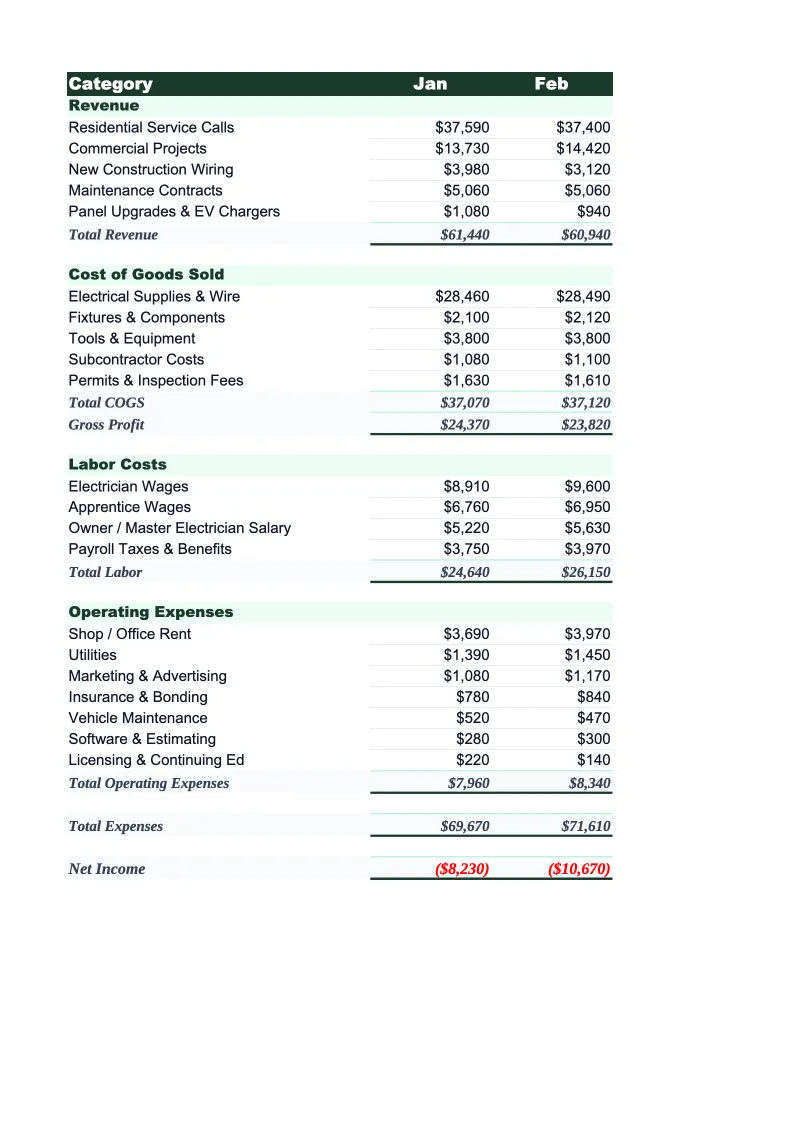
Electrical Budget Template
Plan and track your electrical contracting business finances with a budget built for the trades — pre-loaded with labor, materials, permits, and overhead categories that match how electrical shops actually operate.
What's Inside This Electrical Contractor Budget Template
This template includes 5 worksheets, each designed for a specific part of your electrical financial workflow:
Monthly Budget
The core planning sheet where you map out each month's revenue and expenses.
Annual Summary
A 12-month rollup that consolidates all monthly budget data into a single view.
Budget vs Actual
Side-by-side comparison of what you planned versus what actually happened.
Job Cost Summary
A worksheet for tracking estimated versus actual costs across your active and completed jobs.
Dashboard
A one-page visual summary with pre-built charts covering revenue by job type, labor cost as a percentage of revenue, material costs versus budget, and monthly net margin trend.
Electrical Contractor Budget Template Features
- Revenue categories pre-split by job type (residential, commercial, new construction, service)
- Labor costs tracked separately for journeymen, apprentices, and subcontractors
- Job cost summary sheet for bid-to-actual variance analysis
- Monthly budget with 12-month annual rollup and seasonal planning
- Budget vs actual variance tracking with color-coded over/under indicators
- Visual dashboard with labor rate, material cost, and margin charts
How to Use This Electrical Budget Spreadsheet
Getting started takes about 15 minutes. Download the .xlsx file and open it in Excel or Google Sheets — no macros or plugins needed. Start with the Monthly Budget sheet and review the pre-loaded categories. Most electrical contractors find the default setup covers 85–90% of their cost structure; adjust the remaining line items to match your specific operation (swap 'subcontractors' for a more specific vendor category, add a line for specialty certifications, etc.). The income section is already split by job type, so you can assign projected revenue by your service mix rather than entering one lump number.
Once your categories are set, enter your projected revenue and expenses for the current month. If you're mid-year, use last quarter's bank statements and job cost reports as a starting baseline — it doesn't need to be exact on day one. Copy the structure forward for the remaining months, adjusting for your seasonal patterns: if commercial work slows in winter, dial back commercial revenue for January and February. The Annual Summary and Dashboard update automatically as you work through the months.
15 minutes from download to your first electrical budget
Download the template, plug in your numbers, and see your electrical contracting business's full financial picture — monthly budget, job cost tracking, and variance analysis included.
Why Every Electrical Contractor Needs a Budget Template
Electrical contractors operate on thin net margins — typically 5–12% — despite strong gross margins of 35–50%. That gap is where budgeting matters most. The difference between a profitable year and a losing one often comes down to labor overruns, material cost increases, and overhead creep that go untracked until the bank statement looks wrong. Most electrical shops estimate carefully at the bid stage, then lose track of costs once work is underway. A structured budget closes that loop by giving you something to compare against month by month.
The cost structure of an electrical contracting business has some quirks that generic budget templates miss entirely. Labor is your biggest variable cost, but it's not uniform — journeymen and apprentices have very different labor rates, and tracking them separately tells you whether your crew mix is efficient. Material costs move fast based on copper prices and supply chain conditions; budgeting materials as a flat percentage of revenue will mislead you in volatile years. Permits and inspection fees are real costs that show up unevenly throughout the year and are easy to forget in annual planning. And vehicle costs — fuel, maintenance, insurance on a fleet of service trucks — are often the second or third largest expense line for a mid-sized shop.
Electrical Industry at a Glance
Financial templates built for electrical contractors — from solo electricians to multi-crew commercial shops. Pre-loaded with labor, materials, and overhead categories specific to the electrical trades.
Revenue Drivers
- Residential service calls
- Commercial project contracts
- New construction installs
- Panel upgrades
- Maintenance & service agreements
- Material markups
Key Cost Categories
- Materials & wire
- Labor (journeymen & apprentices)
- Permits & inspection fees
- Vehicle & fuel
- Tools & equipment
- Insurance & bonding
- Subcontractors
- Overhead & office
Typical Margins
Gross: 35-50% · Net: 5-12%
Seasonality
Commercial construction peaks spring through fall. Residential service work is relatively steady year-round, with spikes in summer (AC-related) and fall (heating season). Slowest in January–February.
Key Performance Indicators
Electrical Contractor Budget Template FAQ
More Electrical Templates
Electrical Contractor Balance Sheet Template for Excel
$29
Electrical Contractor Business Plan Template for Excel
$39
Electrical Contractor Cash Flow Template for Excel
$29
Electrical Contractor Expense Tracker Template for Excel
$29
Electrical Contractor Financial Model Template for Excel
$29
Electrical Contractor Income Statement Template for Excel
$29
Electrical Invoice Template for Excel
$29
Electrical Contractor KPI Dashboard Template for Excel
$29
Electrical Contractor P&L Template for Excel
$29
Electrical Contractor Pro Forma Template for Excel
$29
Electrical Project Budget Template for Excel
$29
Electrical Contractor Sales Forecast Template for Excel
$29
Electrical Contractor Valuation Template for Excel
$29
Electrical Budget Template
$29