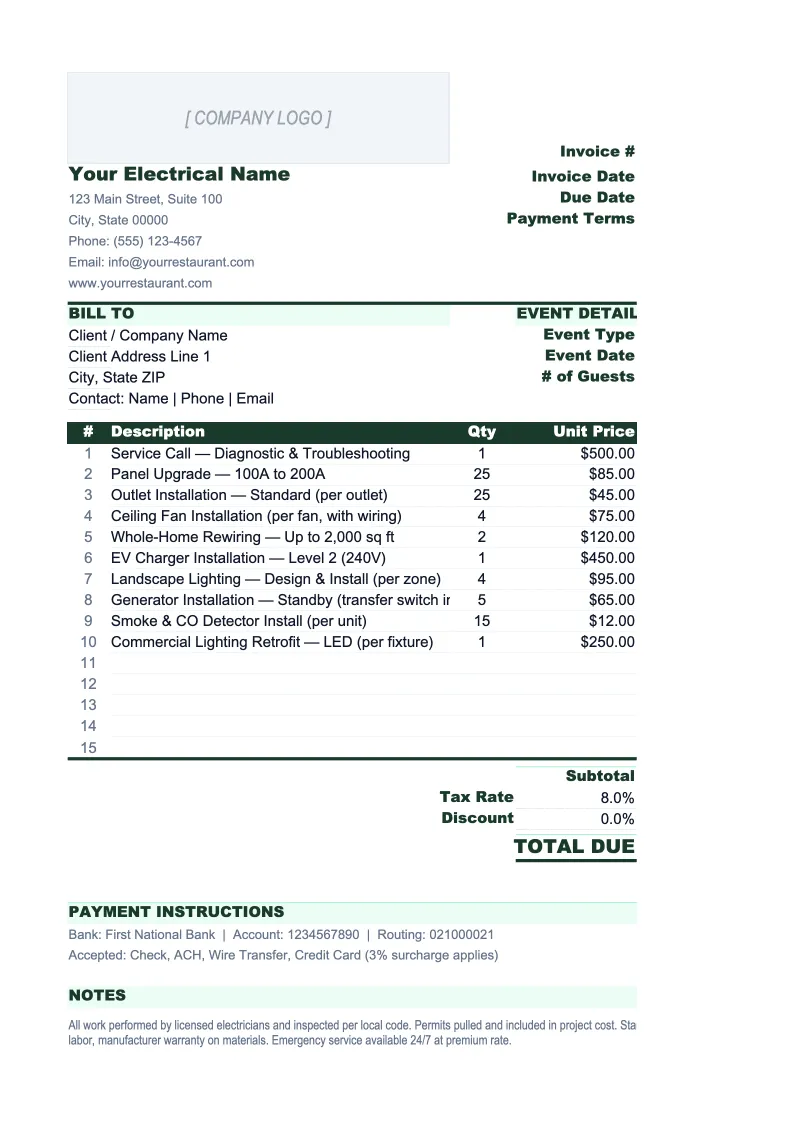
Electrical Invoice Template
Invoice residential and commercial clients with a template built for electrical contractors — pre-loaded with labor tiers, itemized materials, permit fees, and license number fields.
What's Inside This Electrical Invoice Template
This template includes 4 worksheets, each designed for a specific part of your electrical financial workflow:
Invoice
The customer-facing invoice form with fields for your contractor license number, bonding information, and business details at the top — required in most states before you can legally bill for electrical work.
Materials Lookup
A reference sheet for your most commonly billed materials — wire by gauge, breakers, panels, conduit, fixtures, outlets, switches, and any specialty items you install regularly.
Invoice Log
A running record of every invoice issued, with columns for invoice number, date, customer name, job address, permit number, labor total, materials total, permit fees, tax, invoice total, and payment status.
Settings
A one-time configuration sheet where you enter your business name, license number, bonding information, address, phone, and email so they appear on every invoice automatically.
Electrical Invoice Template Features
- Separate labor and materials line items with auto-calculated extended costs and markup
- Labor category rows for master electrician, journeyman, and apprentice rates
- License number, bonding info, and permit number fields for compliance
- Permit and inspection fees billed as a separate line item
- Invoice log for tracking paid/unpaid status and accounts receivable history
- Settings sheet for default labor rates, material markup, and tax rate
How to Use This Electrical Contractor Invoice Spreadsheet
Start by opening the Settings sheet and entering your business name, contractor license number, bonding information, and contact details — this is the data that populates the header of every invoice automatically. Set your default hourly rates for each labor category (master, journeyman, apprentice) and your standard material markup percentage. If your tax rate differs between residential and commercial work, you can toggle between the two rates on each invoice. This initial setup takes about ten minutes and you won't need to revisit it unless your rates or license information changes.
For each job, open the Invoice sheet and fill in the customer and project details at the top: billing address, job site address, permit number, and work authorization reference. Work through the labor section first — enter each task or phase with a description, the labor category, hours, and rate. Then list materials line by line with part numbers, quantities, and unit costs; the markup percentage applies automatically. Add any permit or inspection fees in the dedicated line below the materials section. When you're satisfied, print or export to PDF and send to the customer.
15 minutes from download to your first invoice
Download the template, enter your license details and rates, and start billing customers with an invoice that covers every line item electrical work requires.
Why Electrical Contractors Need a Proper Invoice Template
Electrical invoices carry legal weight that most other trade invoices don't. In the majority of states, an electrical contractor's invoice must include their license number, and billing for work done without proper licensing or permitting is grounds for non-payment and license action. Generic invoice templates have no fields for license numbers, permit references, or bonding information — which means contractors using them are either adding that information manually each time or leaving it off and creating liability. A template built for electrical work handles all of that from the start.
The labor and materials split matters more in electrical work than in most trades because both sides of the bill require different treatment. Labor — especially when billed at different rates for masters, journeymen, and apprentices — needs to be clearly itemized for customers to verify they're being charged correctly, and for larger commercial jobs, the general contractor's accounting team may require it for their own job costing. Materials need part numbers and quantities because electricians frequently warrant their parts separately from labor, and a dispute about a failed breaker or a wiring defect is much easier to resolve when there's a clear record of exactly what was installed. The standard practice is to mark up materials 20–35% over cost; tracking that markup in the invoice keeps your billing consistent and your margins visible.
Electrical Industry at a Glance
Financial templates built for electrical contractors — from solo electricians to multi-crew commercial shops. Pre-loaded with labor, materials, and overhead categories specific to the electrical trades.
Revenue Drivers
- Residential service calls
- Commercial project contracts
- New construction installs
- Panel upgrades
- Maintenance & service agreements
- Material markups
Key Cost Categories
- Materials & wire
- Labor (journeymen & apprentices)
- Permits & inspection fees
- Vehicle & fuel
- Tools & equipment
- Insurance & bonding
- Subcontractors
- Overhead & office
Typical Margins
Gross: 35-50% · Net: 5-12%
Seasonality
Commercial construction peaks spring through fall. Residential service work is relatively steady year-round, with spikes in summer (AC-related) and fall (heating season). Slowest in January–February.
Key Performance Indicators
Electrical Invoice Template FAQ
More Electrical Templates
Electrical Contractor Balance Sheet Template for Excel
$29
Electrical Contractor Budget Template for Excel
$29
Electrical Contractor Business Plan Template for Excel
$39
Electrical Contractor Cash Flow Template for Excel
$29
Electrical Contractor Expense Tracker Template for Excel
$29
Electrical Contractor Financial Model Template for Excel
$29
Electrical Contractor Income Statement Template for Excel
$29
Electrical Contractor KPI Dashboard Template for Excel
$29
Electrical Contractor P&L Template for Excel
$29
Electrical Contractor Pro Forma Template for Excel
$29
Electrical Project Budget Template for Excel
$29
Electrical Contractor Sales Forecast Template for Excel
$29
Electrical Contractor Valuation Template for Excel
$29
Electrical Invoice Template
$29