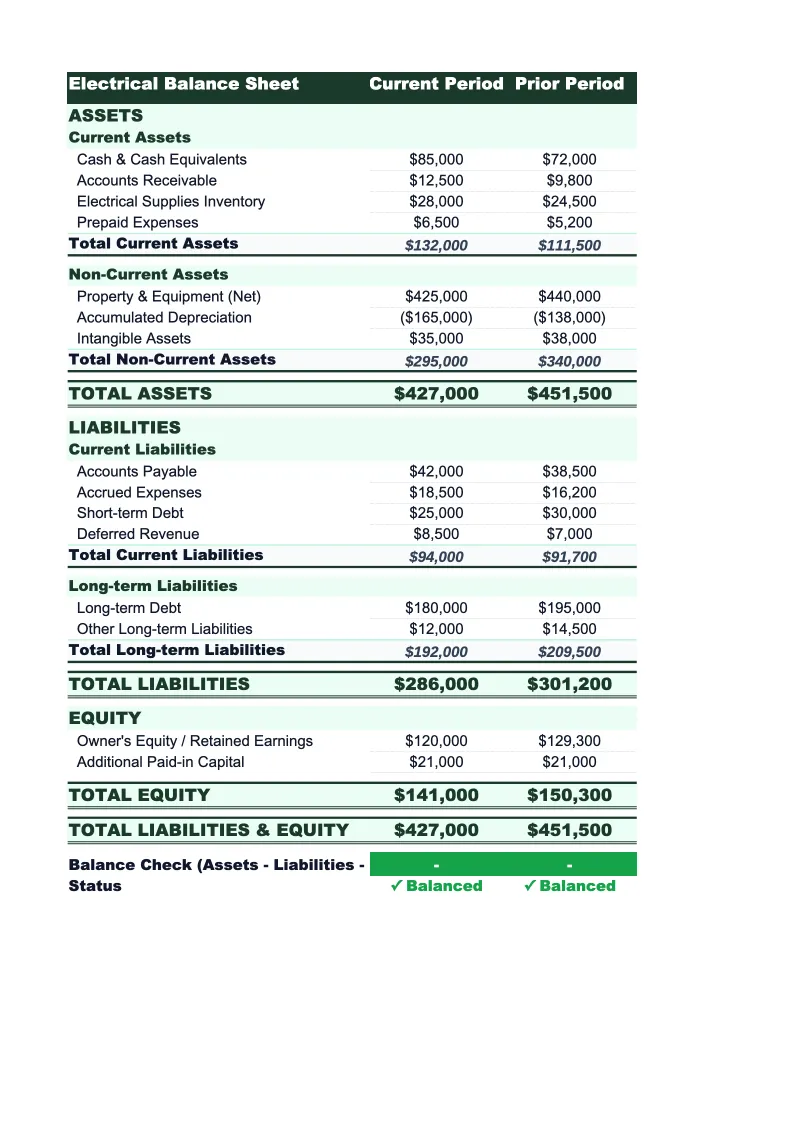
Electrical Balance Sheet Template
See exactly what your electrical contracting business owns, owes, and is worth — with a balance sheet built for contractors, not generic businesses.
What's Inside This Electrical Contractor Balance Sheet Template
This template includes 4 worksheets, each designed for a specific part of your electrical financial workflow:
Balance Sheet
The main snapshot of your electrical contracting business at a point in time.
Prior Period Comparison
A side-by-side view of the current period next to the prior period, with a column showing dollar change and percentage change for every line item.
Fixed Asset Schedule
A detailed register of every piece of major equipment and vehicle in your fleet.
Notes
A structured notes section that documents key accounting policies and detail behind the balance sheet numbers.
Electrical Balance Sheet Template Features
- Pre-built asset categories for vehicles, tools, wire, and materials inventory
- Unbilled work in progress (WIP) line item for jobs not yet invoiced
- Fixed asset schedule with depreciation tracking built in
- Prior period comparison showing dollar and percentage change
- Accounts receivable aging summary in the Notes sheet
- Auto-balancing check so you know the sheet is correct before you close it
How to Use This Electrical Contractor Balance Sheet Spreadsheet
Start by downloading the .xlsx file and opening it in Excel or Google Sheets — no macros or add-ins required. Go to the Balance Sheet tab and work through the asset section top to bottom. Enter your cash balances, outstanding receivables, the value of materials on hand, and any other current assets. Then move to the Fixed Asset Schedule tab and log each vehicle and major piece of equipment with its purchase date and original cost — the depreciation and net book value columns are formula-driven and will populate automatically.
Once assets are complete, fill in the liabilities. Enter what you owe to suppliers (accounts payable), any unpaid wages, customer deposits you're holding, and the current balances on vehicle loans, equipment financing, and your line of credit. The equity section at the bottom — owner's capital contributions plus retained earnings — closes the statement. If assets minus liabilities equals equity, the sheet is balanced, and a built-in check cell will confirm this for you.
15 minutes from download to your first balance sheet
Download the template, plug in your numbers, and see your electrical business's complete financial position — assets, liabilities, equity, and net worth all in one place.
Why Every Electrical Contractor Needs a Balance Sheet
Most electrical contractors run their businesses from job cost reports and bank account balances — they know how much is in checking and whether jobs are profitable, but they don't have a clear picture of the business's overall financial position. That gap shows up when a GC requests a current financial statement for a bonding application, or when you apply for a credit line and the bank asks for a balance sheet. At that point, pulling one together from scratch is a half-day project, and the numbers aren't always clean.
For an electrical contracting business, the balance sheet has some specific characteristics worth understanding. Accounts receivable can be substantial — commercial contractors often have 60–90 day payment cycles from GCs, so receivables may represent 30–45 days of revenue at any given time. Unbilled work in progress is another category that many contractors undervalue on their books: jobs that are complete or in progress but not yet invoiced represent real assets. On the liability side, vehicle and equipment loans are common, and the ratio of current liabilities to current assets (the current ratio) is what lenders and bonding agents look at first to assess financial health. A current ratio above 1.2 is generally considered solid for a trade contractor.
Electrical Industry at a Glance
Financial templates built for electrical contractors — from solo electricians to multi-crew commercial shops. Pre-loaded with labor, materials, and overhead categories specific to the electrical trades.
Revenue Drivers
- Residential service calls
- Commercial project contracts
- New construction installs
- Panel upgrades
- Maintenance & service agreements
- Material markups
Key Cost Categories
- Materials & wire
- Labor (journeymen & apprentices)
- Permits & inspection fees
- Vehicle & fuel
- Tools & equipment
- Insurance & bonding
- Subcontractors
- Overhead & office
Typical Margins
Gross: 35-50% · Net: 5-12%
Seasonality
Commercial construction peaks spring through fall. Residential service work is relatively steady year-round, with spikes in summer (AC-related) and fall (heating season). Slowest in January–February.
Key Performance Indicators
Electrical Contractor Balance Sheet Template FAQ
More Electrical Templates
Electrical Contractor Budget Template for Excel
$29
Electrical Contractor Business Plan Template for Excel
$39
Electrical Contractor Cash Flow Template for Excel
$29
Electrical Contractor Expense Tracker Template for Excel
$29
Electrical Contractor Financial Model Template for Excel
$29
Electrical Contractor Income Statement Template for Excel
$29
Electrical Invoice Template for Excel
$29
Electrical Contractor KPI Dashboard Template for Excel
$29
Electrical Contractor P&L Template for Excel
$29
Electrical Contractor Pro Forma Template for Excel
$29
Electrical Project Budget Template for Excel
$29
Electrical Contractor Sales Forecast Template for Excel
$29
Electrical Contractor Valuation Template for Excel
$29
More Balance Sheet Templates
Electrical Balance Sheet Template
$29