Wedding Planning Budget Template
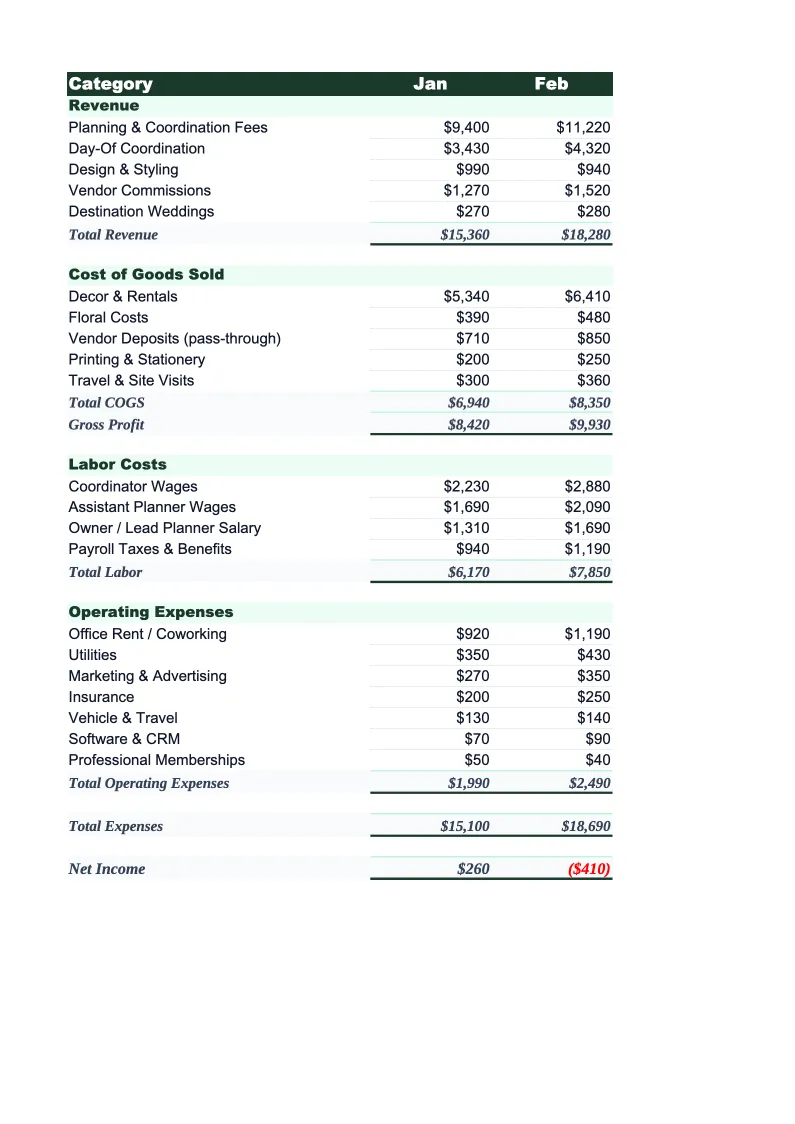
Budget your wedding planning business with a template built for coordinators — pre-loaded with planning fees, vendor pass-throughs, and per-event profitability tracking.
What's Inside This Wedding Planning Budget Template
This template includes 5 worksheets, each designed for a specific part of your wedding planning financial workflow:
Monthly Budget
The core worksheet where you plan each month's revenue and expenses.
Annual Summary
A 12-month rollup that pulls from each monthly sheet automatically.
Budget vs Actual
Track what you planned against what actually happened.
Event Tracker
A per-event profitability log where you record the contract value, service type, event date, and actual costs for each wedding.
Dashboard
A visual overview with pre-built charts showing monthly revenue, event count by month, gross margin percentage, and expense breakdowns.
Wedding Planning Budget Template Features
- Revenue categories for full-service, day-of, and vendor pass-through income
- Per-event profitability tracker with margin calculations
- Monthly budget with 12-month annual rollup
- Budget vs actual variance tracking with color-coded alerts
- Gross margin auto-calculation per month and per event
- Visual dashboard with event count, revenue, and margin charts
How to Use This Wedding Planning Budget Spreadsheet
Getting started takes about 15 minutes. Download the .xlsx file and open it in Excel or Google Sheets — no macros or plugins required. Begin with the Monthly Budget sheet: review the pre-loaded revenue and expense categories and adjust them to match your business. Most planners keep the revenue categories as-is (full-service fees, day-of packages, commissions) and adjust the overhead line items to reflect their actual subscriptions and insurance costs. If you only offer one service type, you can hide or delete the rows you don't use.
Once the structure looks right, enter your projected revenue and expenses for each month. If you are new to budgeting your business, use last year's bank statements and invoices as your baseline — estimate conservatively on revenue and err toward higher estimates on expenses. As you add events to your calendar, log them in the Event Tracker sheet with the contract value and service type. The Dashboard and Annual Summary update automatically, so you always have a current view of where the year is heading.
15 minutes from download to your first budget
Download the template, plug in your numbers, and see your wedding planning business's full financial picture — monthly budget, per-event profitability, and variance tracking included.
Why Every Wedding Planning Business Needs a Budget Template
Wedding planning businesses have unusual financial dynamics: revenue is highly concentrated in spring and fall, a large portion of revenue flows through as vendor pass-throughs that look like income but aren't, and cash can sit uncollected for months while events are still being planned. Most planners track what they earn per wedding without a clear picture of what each event actually costs them — assistant time, mileage, vendor coordination hours, and licensing fees can quietly compress margins from 65% down to 30% before anyone notices.
A proper budget for a wedding planning business separates your real profit drivers from the noise. Full-service planning fees and day-of coordination packages are your core revenue — they should be tracked by service tier so you know which packages are actually profitable. Vendor pass-throughs need their own line because their margin is thin (typically 10–15% markup) and conflating them with service fees inflates your revenue without adding real profit. On the expense side, labor — your own time and any assistant coordinators or subcontracted planners — is your biggest variable cost and the hardest to control during a busy season.
Wedding Planning Industry at a Glance
Financial templates built for wedding planners and coordinators — from day-of coordinators to full-service agencies. Pre-loaded with fee structures, payment milestone tracking, and vendor pass-through categories.
Revenue Drivers
- Full-service planning fees
- Day-of coordination packages
- Vendor referral commissions
- Vendor pass-through markups
- Add-on services (rehearsal dinner, elopements)
Key Cost Categories
- Assistant coordinator wages
- Contractor/sub-planner fees
- Vendor pass-through costs
- Marketing (Knot/WeddingWire listings)
- Planning software subscriptions
- Professional liability insurance
- Transportation and mileage
Typical Margins
Gross: 55-70% · Net: 15-25%
Seasonality
Peak weddings in May-June (spring) and September-October (fall). January-February slowest for events but highest for new bookings from holiday-engaged couples.
Key Performance Indicators
Wedding Planning Budget Template FAQ
More Wedding Planning Templates
Wedding Planning Balance Sheet Template for Excel
$29
Wedding Planning Business Plan Template for Excel
$39
Wedding Planning Cash Flow Template for Excel
$29
Wedding Planning Expense Tracker Template for Excel
$29
Wedding Planning Financial Model Template for Excel
$29
Wedding Planning Income Statement Template for Excel
$29
Wedding Planning Invoice Template for Excel
$29
Wedding Planner KPI Dashboard Template for Excel
$29
Wedding Planner P&L Template for Excel
$29
Wedding Planning Pro Forma Template for Excel
$29
Wedding Planning Project Budget Template for Excel
$29
Wedding Planning Sales Forecast Template for Excel
$29
Wedding Planning Business Valuation Template for Excel
$29
Wedding Planning Budget Template
$29