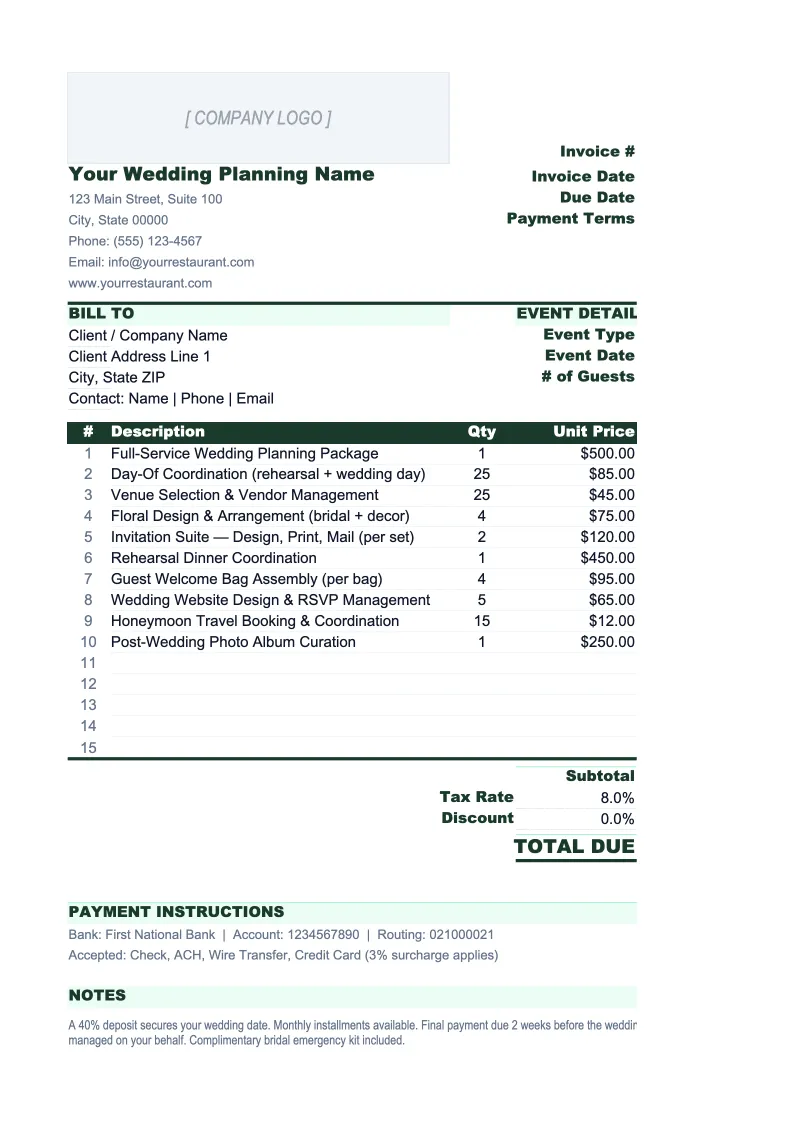
Wedding Planning Invoice Template
Invoice clients by milestone, track payment schedules across all active weddings, and reconcile vendor pass-throughs — in one Excel template built around how wedding planning businesses actually bill.
What's Inside This Wedding Planning Invoice Template
This template includes 5 worksheets, each designed for a specific part of your wedding planning financial workflow:
Client Invoice
The client-facing invoice sheet you'll customize and send for each billing milestone.
Invoice Log
A running record of every invoice you've issued across all clients and weddings.
Payment Schedule
A milestone-by-milestone payment tracker for every active wedding.
Vendor Pass-Throughs
A per-event tracker for all vendor costs that flow through your business to the client.
Client & Wedding Directory
A master list of all clients, active and past, with one row per wedding.
Wedding Planning Invoice Template Features
- Client invoice with milestone payment deduction and automatic balance-due calculation
- Invoice log with payment status tracking and total outstanding AR summary
- Payment schedule with three-milestone structure (retainer, second payment, final balance) and overdue flags
- Vendor pass-through tracker with markup percentage and client billing amount calculations
- Client and wedding directory with package tier and fee structure fields for annual business review
- Built around Day-Of, Partial Planning, and Full-Service fee structures — flat fee, % of budget, or hourly
How to Use This Wedding Planning Invoice Spreadsheet
Start by setting up the Client & Wedding Directory with all your active bookings. Enter each couple's names, wedding date, venue, package tier, agreed fee, and fee structure. This takes 10-15 minutes for your current client roster and becomes the data source for the rest of the template — client dropdowns on the Invoice and Payment Schedule sheets auto-populate from this list, so you're not retyping names every time you create a new invoice.
For each billing milestone, open the Client Invoice sheet, select the couple from the dropdown, and fill in the invoice date and due date. The line items are pre-built for the most common wedding planner charges: planning fee (enter your flat fee, percentage, or hourly total), assistant coordinator hours and rate, add-ons like rehearsal dinner coordination or travel fees, and any vendor pass-throughs. Enter any prior deposit received in the deduction line, and the balance due calculates automatically. Export to PDF, send to the client, and log the invoice in the Invoice Log with a status of Outstanding.
15 minutes from download to your first client invoice
Download the template, add your active weddings, and start sending milestone invoices with a spreadsheet built for how wedding planners actually bill.
Why Wedding Planners Need a Dedicated Invoice Template
Wedding planning is a service business with a billing structure unlike most other professional services. You're collecting money across a 12-18 month planning window, managing vendor contracts on behalf of clients, and sometimes taking on significant financial exposure between when you pay vendors and when you collect from clients. A generic invoice template doesn't account for milestone billing, vendor pass-throughs, or the payment schedule complexity that comes with coordinating 15-25 weddings per year. Without a structured billing system, it's easy to lose track of which clients owe what and when — and a missed final balance two weeks before the wedding date is a crisis, not an inconvenience.
The standard financial benchmarks for a wedding planning business: gross margins of 55-70% for coordination-only services (your main direct cost is assistant labor at $25-50/hour per assistant on the wedding day); net margins of 15-25% for solo operators after marketing, software, and insurance; a retainer of 25-33% of total fee collected at contract signing; and a booking conversion rate of 25-40% from consultation to signed contract (top planners hit 50%+). Vendor pass-through markups of 10-20% are standard practice and should always be disclosed in your contract. Accounts receivable past 30 days should stay below 5% of annual revenue — wedding clients who haven't paid their final balance two weeks out need a direct conversation, not another invoice email.
Wedding Planning Industry at a Glance
Financial templates built for wedding planners and coordinators — from day-of coordinators to full-service agencies. Pre-loaded with fee structures, payment milestone tracking, and vendor pass-through categories.
Revenue Drivers
- Full-service planning fees
- Day-of coordination packages
- Vendor referral commissions
- Vendor pass-through markups
- Add-on services (rehearsal dinner, elopements)
Key Cost Categories
- Assistant coordinator wages
- Contractor/sub-planner fees
- Vendor pass-through costs
- Marketing (Knot/WeddingWire listings)
- Planning software subscriptions
- Professional liability insurance
- Transportation and mileage
Typical Margins
Gross: 55-70% · Net: 15-25%
Seasonality
Peak weddings in May-June (spring) and September-October (fall). January-February slowest for events but highest for new bookings from holiday-engaged couples.
Key Performance Indicators
Wedding Planning Invoice Template FAQ
More Wedding Planning Templates
Wedding Planning Balance Sheet Template for Excel
$29
Wedding Planning Budget Template for Excel
$29
Wedding Planning Business Plan Template for Excel
$39
Wedding Planning Cash Flow Template for Excel
$29
Wedding Planning Expense Tracker Template for Excel
$29
Wedding Planning Financial Model Template for Excel
$29
Wedding Planning Income Statement Template for Excel
$29
Wedding Planner KPI Dashboard Template for Excel
$29
Wedding Planner P&L Template for Excel
$29
Wedding Planning Pro Forma Template for Excel
$29
Wedding Planning Project Budget Template for Excel
$29
Wedding Planning Sales Forecast Template for Excel
$29
Wedding Planning Business Valuation Template for Excel
$29
Wedding Planning Invoice Template
$29