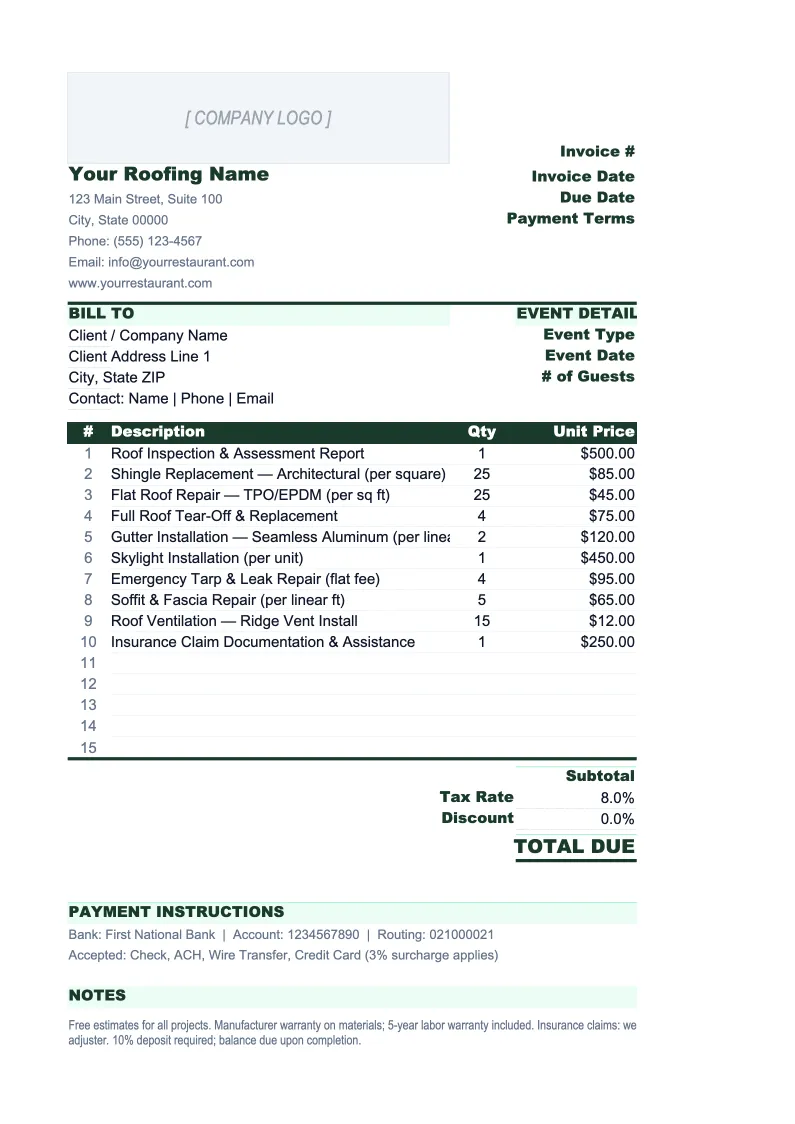
Roofing Invoice Template
Invoice residential and commercial roofing jobs faster with a template built for contractors — pre-loaded with shingle quantities by square, labor, disposal, permit, and warranty fields.
What's Inside This Roofing Invoice Template
This template includes 4 worksheets, each designed for a specific part of your roofing financial workflow:
Invoice
The customer-facing invoice form with fields for the project address, customer contact details, and a structured line-item table organized into materials, labor, and additional charges.
Estimate
A pre-job estimate sheet that mirrors the invoice structure, allowing you to produce a professional written estimate before work begins and convert it to a final invoice when the job is complete.
Invoice Log
A running history of every job, with columns for invoice number, date, customer name, project address, job type (residential replacement, repair, commercial), total materials, total labor, total invoice amount, and payment status.
Settings
A one-time configuration sheet where you enter your company name, address, phone, email, contractor license number, and insurance information so they appear automatically on every invoice and estimate.
Roofing Invoice Template Features
- Materials section with shingle quantities in squares, per-square pricing, and extended costs
- Separate tear-off and installation labor lines billed by square or by the job
- Disposal, dumpster rental, and permit fee line items as separate charges
- Estimate sheet in identical format for pre-job quotes — convert to invoice when done
- Invoice log tracking job type, materials, labor, total, and payment status
- Settings sheet for contractor license number, insurance info, and tax rate defaults
How to Use This Roofing Invoice Spreadsheet
Start in the Settings sheet and enter your company information, contractor license number, and default tax rate — this takes about five minutes and flows into every invoice and estimate automatically. If you have a standard per-square labor rate for tear-off and installation, enter it there as well so the Invoice sheet pre-fills those rows. Your license number and insurance details are worth entering carefully, since many homeowners and property managers require them before signing a contract.
For each new job, start with the Estimate sheet. Enter the project address and customer details, then work through the materials section: measure the roof, calculate squares, and enter quantities for shingles, underlayment, ice and water shield, flashing, and other components. Add your labor lines for tear-off and installation, then list any disposal, permit, and equipment costs separately. Hand the customer a printed or PDF estimate that includes your warranty terms and material specifications. When the job is complete and you're ready to invoice, enter the actual quantities and costs in the Invoice sheet — which follows the same structure — and compare to your estimate to see where job costs came in over or under.
15 minutes from download to your first roofing invoice
Download the template, enter your company details, and start invoicing jobs with a format that covers materials by square, labor by task, disposal, permits, and warranty terms.
Why Roofing Contractors Need a Proper Invoice Template
Roofing invoices carry more legal and financial weight than invoices in most trades. In most states, a written contract and final invoice are required for any job over a certain dollar threshold — and roofing jobs almost always exceed it. The invoice serves as the legal record of what was installed, what materials were used, and what warranties apply. When a homeowner files an insurance claim six months after a storm, or when a shingle fails under warranty, the invoice is what determines whether the contractor is covered. Shops that use generic invoices or handwritten estimates often find themselves in disputes that a properly structured roofing invoice would have prevented.
For insurance claim work — which represents a significant share of roofing revenue in storm-prone markets — invoice structure matters even more. Insurance adjusters work from standardized estimating software and expect to see materials itemized in squares with specific product specifications, labor broken out by task, and a clear waste factor calculation. An invoice that bundles everything into a single 'roofing replacement' line will trigger a supplement request and delay payment. A properly itemized invoice that matches the adjuster's own estimate line-by-line closes faster and reduces back-and-forth. Roofing contractors who do a lot of insurance work quickly learn that their invoicing format directly affects how fast they get paid.
Roofing Industry at a Glance
Financial templates built for roofing contractors — from owner-operators running residential crews to multi-crew companies handling commercial projects. Pre-loaded with materials, labor, and job-cost categories specific to the roofing industry.
Revenue Drivers
- Residential re-roofing (full replacements)
- Roof repairs and patching
- Commercial roofing projects
- Gutter installation and repair
- Insurance claim work
- Emergency repairs
Key Cost Categories
- Roofing materials (shingles, underlayment, flashing)
- Subcontractor and crew labor
- Disposal and dumpster rental
- Permit fees
- Equipment and tools
- Insurance (liability, workers comp)
- Vehicle and transportation
- Overhead and office costs
Typical Margins
Gross: 25-40% · Net: 6-15%
Seasonality
Peak season runs spring through early fall (April–October); storm events drive unpredictable surges year-round. November through March is the slow season in northern markets, though southern markets work year-round.
Key Performance Indicators
Roofing Invoice Template FAQ
More Roofing Templates
Roofing Balance Sheet Template for Excel
$29
Roofing Budget Template for Excel
$29
Roofing Business Plan Template for Excel
$39
Roofing Cash Flow Template for Excel
$29
Roofing Expense Tracker Template for Excel
$29
Roofing Financial Model Template for Excel
$29
Roofing Income Statement Template for Excel
$29
Roofing KPI Dashboard Template for Excel
$29
Roofing P&L Template for Excel
$29
Roofing Pro Forma Template for Excel
$29
Roofing Project Budget Template for Excel
$29
Roofing Sales Forecast Template for Excel
$29
Roofing Business Valuation Template for Excel
$29
Roofing Invoice Template
$29