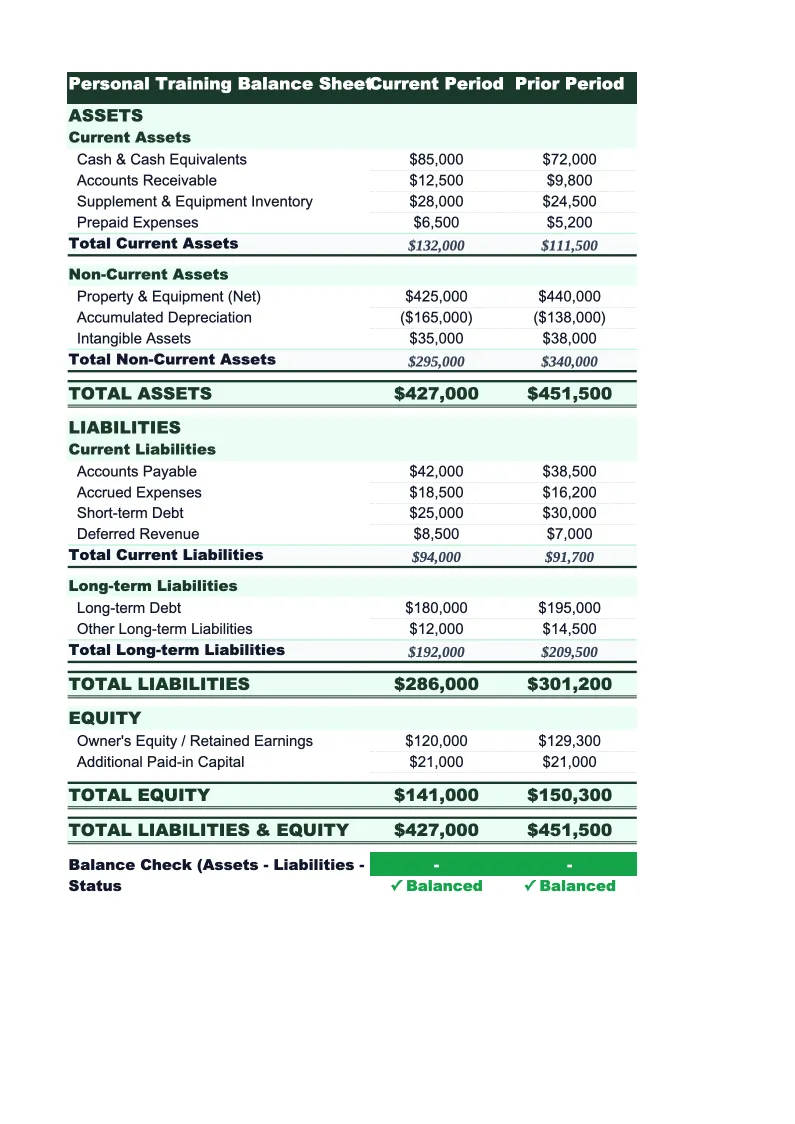
Personal Training Balance Sheet Template
Track your personal training business's financial position with a balance sheet built for fitness professionals — equipment assets, deferred session packages, and owner's equity all in one place.
What's Inside This Personal Training Balance Sheet Template
This template includes 4 worksheets, each designed for a specific part of your personal training financial workflow:
Balance Sheet
The core worksheet showing your personal training business's financial position at a specific date.
Period Comparison
Side-by-side view of your balance sheet across two time periods — most trainers use current month versus prior month, or this year versus last year.
Deferred Sessions Tracker
A client-by-client breakdown of pre-sold session packages and how many sessions remain to be delivered.
Working Capital
A focused view of your short-term liquidity — current assets minus current liabilities, your current ratio, and your quick ratio.
Personal Training Balance Sheet Template Features
- Pre-built assets section covering cash, prepaid gym fees, equipment, and mobile training vehicles
- Deferred revenue line item for session packages sold but not yet delivered
- Deferred Sessions Tracker breaks down outstanding sessions client-by-client
- Period-over-period comparison with dollar and percentage change for every line item
- Working capital, current ratio, and quick ratio auto-calculated
- Equipment section separates small gear (bands, weights) from major assets (machines, vehicles)
How to Use This Personal Training Balance Sheet Spreadsheet
Download the .xlsx file and open it in Excel or Google Sheets — no macros or plugins required. Start with the Balance Sheet tab: review the pre-loaded asset and liability categories and adjust any line items to match your business setup. A studio-based trainer will have different asset categories than a mobile trainer or an online coach, so spend 15 minutes reviewing the structure before entering numbers. The template is built to accommodate all three formats — remove the sections that don't apply and you're ready to go.
Once the structure looks right, enter your current balances. For most personal trainers, the key inputs are: your cash balance, any prepaid gym rental or facility deposits, the value of your fitness equipment (use your purchase price minus rough depreciation if you want a more accurate picture), and your outstanding deferred session liability. For the deferred sessions, use the Deferred Sessions Tracker tab to break it down by client — the total flows automatically back to the Balance Sheet so you don't have to calculate it manually.
20 minutes from download to your first balance sheet
Download the template, enter your balances and session packages, and see your personal training business's full financial position — assets, liabilities, equity, and deferred sessions all in one place.
Why Personal Trainers Need a Balance Sheet Template
Most personal trainers think of their finances as cash in and cash out — sessions happen, clients pay, money goes to the bank. But that picture misses the most important liability in a fitness business: deferred session revenue. When a client buys a 20-session package and pays upfront, that $1,400 sits in your bank account but isn't yours yet. You still owe 20 hours of work. A balance sheet forces you to account for that obligation separately from earned income, which changes how you read your own financial health — especially if you sell aggressively in January and February when motivation is high.
The balance sheet categories that matter most for personal trainers are different from a product business. On the asset side, fitness equipment is often the largest non-cash asset, yet most trainers have no formal record of what they own or what it cost. A structured equipment list in your balance sheet also helps with insurance coverage decisions and tax depreciation. On the liability side, deferred session packages dominate — and unlike a restaurant that delivers service the same day it's paid for, a trainer's obligations can stretch over months. Tracking them client-by-client prevents the common mistake of spending pre-payment cash before the sessions are delivered.
Personal Training Industry at a Glance
Financial templates built for personal trainers and fitness coaches — from solo trainers billing individual clients to studio owners managing packages, group classes, and recurring memberships.
Revenue Drivers
- One-on-one sessions
- Training packages
- Group classes
- Online coaching
- Nutrition coaching add-ons
Key Cost Categories
- Gym rental or facility fees
- Equipment and supplies
- Liability insurance
- Certification and continuing education
- Software and scheduling tools
- Marketing and referral costs
Typical Margins
Gross: 70-85% · Net: 30-55%
Seasonality
January and September are peak sign-up months; summer and the holiday stretch see higher drop-off. Renewal cycles are often tied to 4-, 8-, or 12-week package structures.
Key Performance Indicators
Personal Training Balance Sheet Template FAQ
More Personal Training Templates
Personal Training Budget Template for Excel
$29
Personal Training Business Plan Template for Excel
$39
Personal Training Cash Flow Template for Excel
$29
Personal Training Expense Tracker Template for Excel
$29
Personal Training Financial Model Template for Excel
$29
Personal Training Income Statement Template for Excel
$29
Personal Training Invoice Template for Excel
$29
Personal Training KPI Dashboard Template for Excel
$29
Personal Training P&L Template for Excel
$29
Personal Training Pro Forma Template for Excel
$29
Personal Training Project Budget Template for Excel
$29
Personal Training Sales Forecast Template for Excel
$29
Personal Training Business Valuation Template for Excel
$29
More Balance Sheet Templates
Personal Training Balance Sheet Template
$29