Personal Training Cash Flow Template
Track the timing between package sales, session delivery, and recurring overhead with a cash flow template built for personal trainers — pre-loaded with session revenue, membership categories, and seasonal January and September projections.
What's Inside This Personal Training Cash Flow Template
This template includes 4 worksheets, each designed for a specific part of your personal training financial workflow:
13-Week Cash Flow
A rolling 13-week cash position tracker designed for the short-term horizon where personal trainers feel cash pressure most — when a package run ends and the next sale hasn't happened yet.
Annual Cash Flow
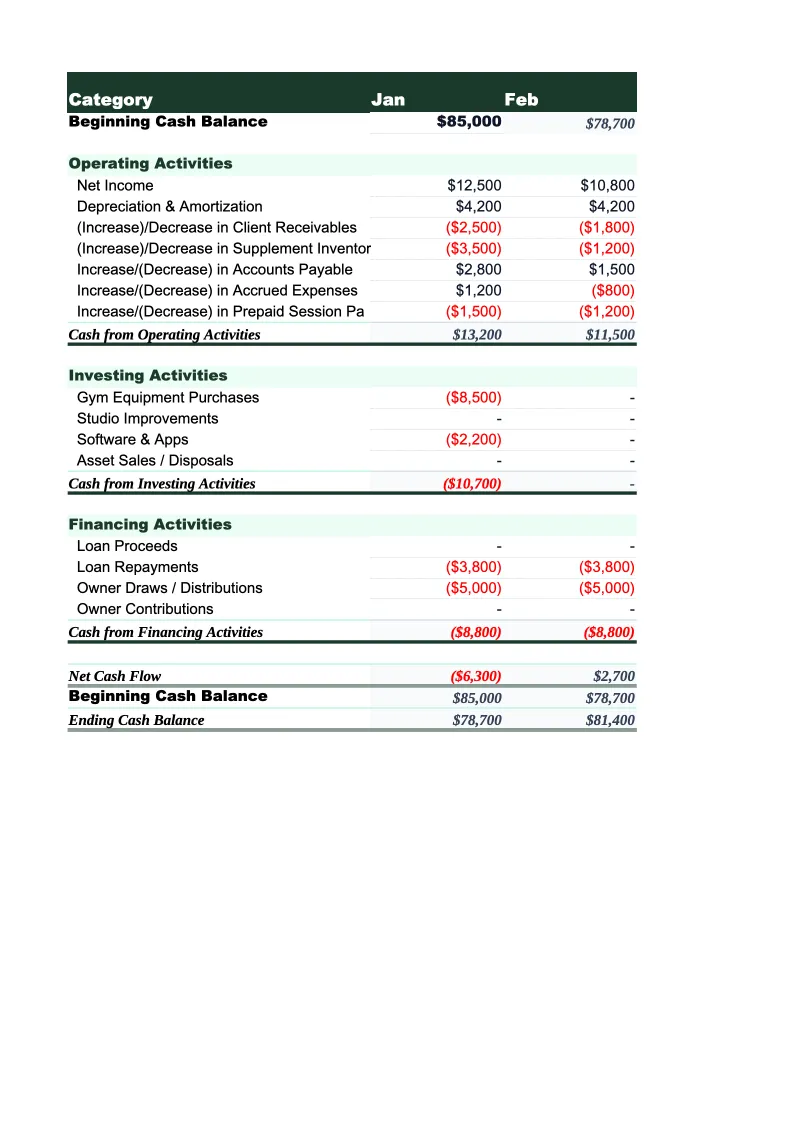
A month-by-month cash flow statement covering the full 12 months, split into operating, investing, and financing sections following standard cash flow accounting structure.
Client & Package Tracker
A per-client worksheet that tracks active packages, sessions remaining, and when the next payment is expected for each client.
Dashboard
A visual one-page summary of your cash position, showing current cash on hand, projected cash inflows and outflows over the next 30 and 90 days, and a monthly bar chart of cash flow across the full year.
Personal Training Cash Flow Template Features
- 13-week rolling cash tracker with weekly session revenue and facility cost detail
- Per-client package tracker showing sessions remaining and renewal timing
- Annual month-by-month cash flow with operating, investing, and financing sections
- Seasonal projections pre-loaded for January and September peak sign-up periods
- Unearned revenue calculation for prepaid packages not yet delivered
- Runway indicator showing weeks of cash remaining at current overhead run rate
How to Use This Personal Training Cash Flow Spreadsheet
Start with the Client & Package Tracker sheet and enter every active client — name, current package type, total sessions purchased, sessions used, and the date they purchased. This takes about 20–30 minutes the first time and gives you a clear picture of what revenue is already collected and what obligations you've taken on. Once that's loaded, the 13-Week sheet has the raw material it needs to project inflows from renewals and flag weeks where package revenue runs thin.
Move to the 13-Week Cash Flow sheet and fill in your recurring weekly outflows: facility rental, any staff or subcontractor costs, software subscriptions, and insurance installments. Then enter the session and package revenue you expect each week based on your current client calendar. If any week shows a negative or dangerously low ending balance, use that as your target — that's the week you need to close a renewal or book a new client before. Most trainers find two or three pressure weeks per quarter once they map it out.
15 minutes from download to your first cash flow forecast
Download the template, enter your active clients and packages, and see exactly when your next cash pressure point is coming.
Why Personal Trainers Need a Cash Flow Template
Cash flow in personal training looks simple from the outside — you train clients, they pay you — but the actual timing creates pressure that catches many trainers off guard. The core issue is that most trainers sell packages: a client pays for 10 or 12 sessions upfront, which creates a cash inflow today and a service obligation spread over the next 6–10 weeks. That upfront payment feels great until you look at the next 30 days and realize you've already collected the money, the sessions are being delivered, and there's no new package sale scheduled to replace that cash. Trainers who don't track this cycle operate on surprise — either a good surprise when a renewal closes on time, or a bad one when it doesn't.
The seasonality problem compounds the package timing issue. January is the highest new-client acquisition month in the personal training industry — gym membership spikes, resolution-driven clients are motivated, and session rates often hold firm. September sees a secondary surge as people return to routine after summer. The months in between, particularly July and August, see higher cancellation rates, summer travel disruptions to session schedules, and slower new client acquisition. A trainer who doesn't build up cash reserves during the January surge can run into genuine cash pressure in August when overhead continues but revenue softens. A 13-week rolling cash view makes this dynamic visible before it becomes a crisis.
Personal Training Industry at a Glance
Financial templates built for personal trainers and fitness coaches — from solo trainers billing individual clients to studio owners managing packages, group classes, and recurring memberships.
Revenue Drivers
- One-on-one sessions
- Training packages
- Group classes
- Online coaching
- Nutrition coaching add-ons
Key Cost Categories
- Gym rental or facility fees
- Equipment and supplies
- Liability insurance
- Certification and continuing education
- Software and scheduling tools
- Marketing and referral costs
Typical Margins
Gross: 70-85% · Net: 30-55%
Seasonality
January and September are peak sign-up months; summer and the holiday stretch see higher drop-off. Renewal cycles are often tied to 4-, 8-, or 12-week package structures.
Key Performance Indicators
Personal Training Cash Flow Template FAQ
More Personal Training Templates
Personal Training Balance Sheet Template for Excel
$29
Personal Training Budget Template for Excel
$29
Personal Training Business Plan Template for Excel
$39
Personal Training Expense Tracker Template for Excel
$29
Personal Training Financial Model Template for Excel
$29
Personal Training Income Statement Template for Excel
$29
Personal Training Invoice Template for Excel
$29
Personal Training KPI Dashboard Template for Excel
$29
Personal Training P&L Template for Excel
$29
Personal Training Pro Forma Template for Excel
$29
Personal Training Project Budget Template for Excel
$29
Personal Training Sales Forecast Template for Excel
$29
Personal Training Business Valuation Template for Excel
$29
Personal Training Cash Flow Template
$29