Ecommerce Cash Flow Template
Track when cash actually moves through your online store — inventory payments, platform payouts, ad spend, and fulfillment costs — with a cash flow template built for ecommerce timing.
What's Inside This Ecommerce Cash Flow Template
This template includes 5 worksheets, each designed for a specific part of your ecommerce financial workflow:
13-Week Cash Flow
A rolling 13-week cash flow view that shows what cash comes in and goes out week by week.
Annual Cash Flow
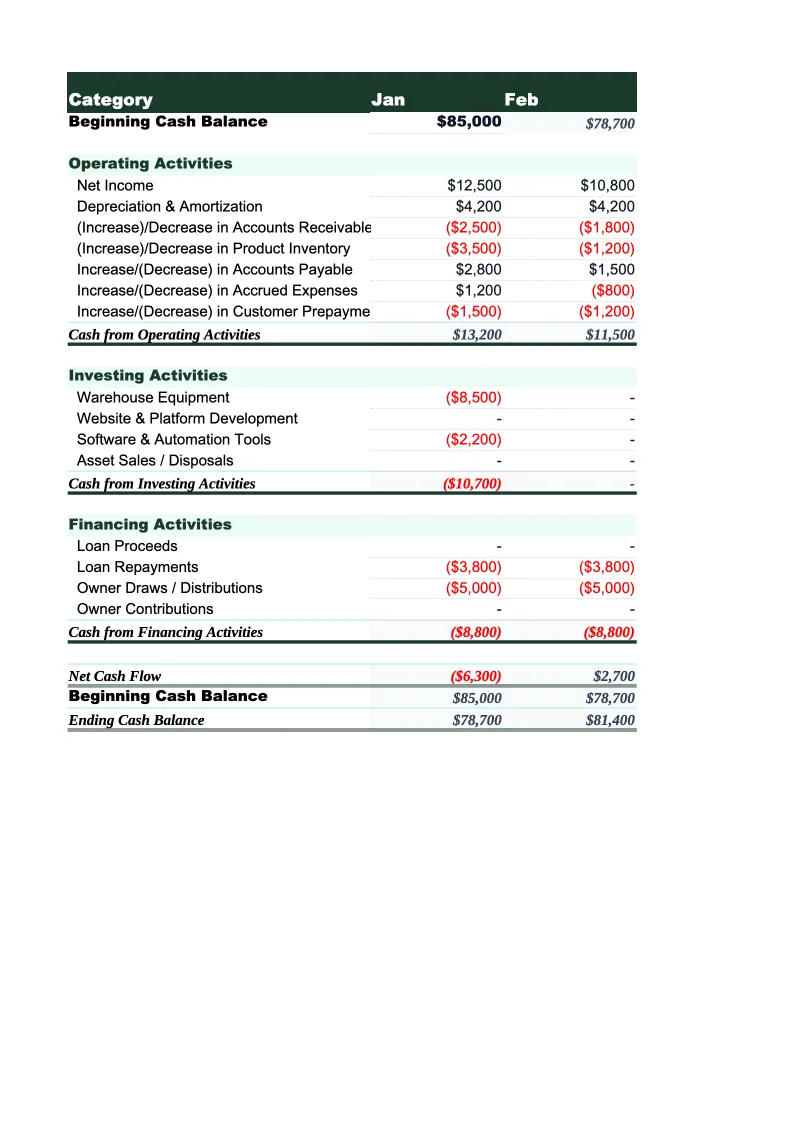
A month-by-month cash flow statement covering the full year.
Inventory Cash Timing
A dedicated worksheet for modeling how inventory purchases hit your cash flow.
Ad Spend & Payout Tracker
A cash timing worksheet for digital advertising and marketplace payouts.
Dashboard
A one-page visual summary with charts for weekly cash balance trend, monthly cash inflows vs.
Ecommerce Cash Flow Template Features
- 13-week rolling cash flow with channel-level revenue rows (DTC, Amazon, marketplace)
- Inventory purchase timing model with supplier payment terms and lead time inputs
- Ad spend and payout lag tracker for Meta, Google, and marketplace platforms
- Annual cash flow with operating, investing, and financing sections
- Cash runway indicator showing weeks of runway at current spend rate
- Q4 seasonal planning rows with Black Friday and holiday inventory flag columns
How to Use This Ecommerce Cash Flow Spreadsheet
Start with the 13-Week Cash Flow sheet. Download the file, open it in Excel or Google Sheets, and begin by entering your current cash balance in the starting balance cell. Then populate the inflow rows with your expected weekly revenue by channel — check your Shopify, Amazon Seller Central, or other platform dashboards for recent weekly averages. For outflows, work through each row: your next inventory purchase date, your average weekly ad spend, your fulfillment cost per order multiplied by expected order volume, and your platform fee rate. This first pass takes about 30-45 minutes and gives you a 13-week projection.
Once the 13-week sheet is set up, move to the Inventory Cash Timing sheet if you order from overseas suppliers. Enter your upcoming purchase orders, supplier payment terms, and expected lead times. The sheet will show you exactly when cash leaves and when you can expect goods to arrive — which tells you whether you have enough cash on hand to fund the next order cycle without drawing on a credit line. If you run paid ads at scale, also fill in the Ad Spend & Payout Tracker with your weekly ad budgets and the average payout delay for each platform.
15 minutes from download to your first cash flow projection
Download the template, enter your starting cash balance and weekly channel revenue, and see your ecommerce store's 13-week cash position — inventory timing, ad spend, and payout lags included.
Why Ecommerce Businesses Need a Cash Flow Template
Ecommerce businesses are profitable on paper much more often than they're cash-positive in practice. The gap comes from timing: you pay suppliers 30-90 days before products sell, ad platforms charge your card before the revenue from those ads arrives, and marketplace payouts come on a fixed schedule that doesn't align with when orders are placed. A 35% gross margin business can still run out of cash if inventory and advertising are scaling faster than payouts clear. This is why cash flow management is a more pressing problem for ecommerce than for service businesses where revenue and cash receipt happen on the same day.
The ecommerce cash flow cycle has three main timing gaps worth modeling. First, the inventory gap: most ecommerce brands buying from overseas suppliers pay 30-50% upfront at order placement, with the balance due before shipment — often 60-90 days before the goods are available for sale. Second, the ad spend gap: when you scale acquisition, you're spending on customer acquisition today against revenue that will arrive in your payout cycle days or weeks later. Third, the returns gap: ecommerce return rates run 15-30% depending on category, and those refunds hit your cash balance before you've recovered the inventory costs. A good cash flow template makes all three of these gaps visible so you can plan around them.
Ecommerce Industry at a Glance
Financial templates built for ecommerce businesses — from Shopify stores to Amazon sellers. Pre-loaded with SKU-level line items, platform fee categories, return tracking, and the metrics that drive online retail profitability.
Revenue Drivers
- Direct-to-consumer product sales
- Wholesale and B2B orders
- Marketplace sales (Amazon, eBay, Etsy)
- Subscription or bundle revenue
Key Cost Categories
- Cost of goods sold (inventory)
- Shipping and fulfillment
- Payment processing fees
- Platform and marketplace fees
- Returns and refunds
- Digital advertising and customer acquisition
Typical Margins
Gross: 30-55% · Net: 5-15%
Seasonality
Heavy Q4 concentration around Black Friday, Cyber Monday, and holiday gifting. Many categories also spike in January (post-holiday), back-to-school (August), and Mother's Day.
Key Performance Indicators
Ecommerce Cash Flow Template FAQ
More Ecommerce Templates
Ecommerce Balance Sheet Template for Excel
$29
Ecommerce Budget Template for Excel
$29
E-commerce Business Plan Template for Excel
$39
Ecommerce Expense Tracker Template for Excel
$29
Ecommerce Financial Model Template for Excel
$29
Ecommerce Income Statement Template for Excel
$29
Ecommerce Invoice Template for Excel
$29
Ecommerce KPI Dashboard Template for Excel
$29
Ecommerce P&L Template for Excel
$29
Ecommerce Pro Forma Template for Excel
$29
Ecommerce Project Budget Template for Excel
$29
Ecommerce Sales Forecast Template for Excel
$29
Ecommerce Business Valuation Template for Excel
$29
Ecommerce Cash Flow Template
$29