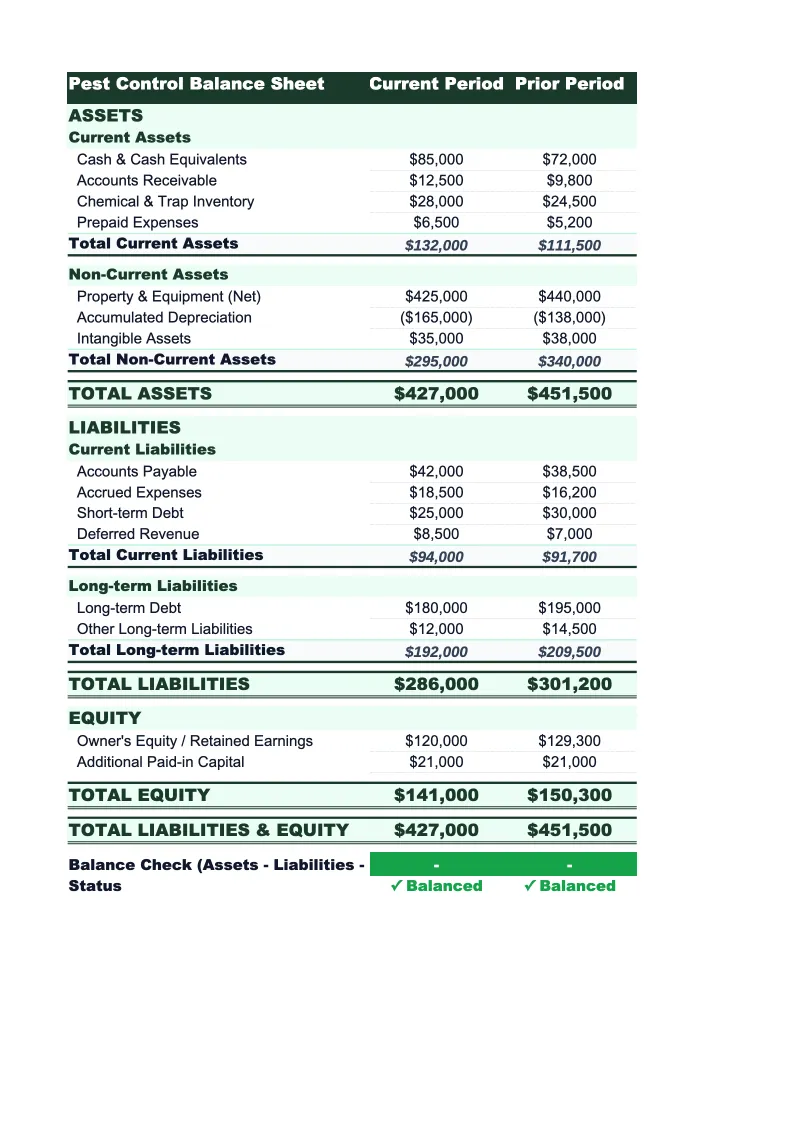
Pest Control Balance Sheet Template
Track what your pest control business owns, owes, and is worth — with categories built for route-based operators managing fleets, chemical inventory, and recurring service contracts.
What's Inside This Pest Control Balance Sheet Template
This template includes 4 worksheets, each designed for a specific part of your pest control financial workflow:
Balance Sheet
The main snapshot of your pest control company's financial position at a specific date.
Period Comparison
A side-by-side view of your balance sheet across two periods — typically the current quarter versus the same quarter last year, or current month versus prior month.
Working Capital
A focused analysis of your current assets versus current liabilities — the short-term liquidity picture that matters most for a route-based business.
Notes & Schedules
Supporting detail behind the balance sheet figures.
Pest Control Balance Sheet Template Features
- Fleet and equipment depreciation schedule with book value tracking
- Deferred revenue line for prepaid annual and quarterly service contracts
- Chemical and materials inventory as a separate current asset category
- Accounts receivable aging breakdown (current, 30, 60, 90+ days)
- Period-over-period comparison with dollar and percentage variance
- Working capital, current ratio, and quick ratio auto-calculated
How to Use This Pest Control Balance Sheet Spreadsheet
Start with the Notes & Schedules tab. List every vehicle in your fleet — truck, van, or ride-along unit — with its purchase price and date. Do the same for spray equipment, pumps, and any other capitalized assets. The depreciation schedule calculates book values automatically and feeds those totals into the Balance Sheet tab so you don't enter them twice. This step takes most operators 20–30 minutes the first time, but once it's done, you only update it when you add or retire a vehicle.
Move to the Balance Sheet tab and fill in your current asset and liability figures as of the date you're preparing it. Pull cash from your bank statement, accounts receivable from your CRM or billing software, and chemical inventory from your last stock count. For deferred revenue, add up any prepaid annual or quarterly contracts where you've already collected cash but haven't yet completed the service — this is a liability, not income. Enter your vehicle loan balances under long-term liabilities. The equity section calculates automatically once assets and liabilities are in.
15 minutes from download to your pest control balance sheet
Download the template, enter your fleet, chemical inventory, and contract liabilities, and see your pest control company's net worth — with period comparison and working capital analysis included.
Why Every Pest Control Business Needs a Balance Sheet
Pest control companies often underestimate how much capital is tied up in their business. A five-truck operation might have $150,000 or more in vehicles alone, plus equipment, chemical inventory, and the intangible value of their route base. Without a balance sheet, owners know their monthly revenue and maybe their bank balance — but they don't know their net worth, their debt-to-equity ratio, or whether they have the equity position to qualify for a vehicle loan. Banks require a balance sheet for most business financing, and buyers require one when you're ready to sell.
The balance sheet categories that matter most in pest control differ from other service businesses. Deferred revenue from prepaid contracts is the biggest one — when a customer pays $500 for an annual service agreement in January, that's not income until the service is delivered. It sits as a liability on the balance sheet. Fleet depreciation is another: vehicles are a major asset, but their book value declines each year and needs to be tracked against outstanding loan balances. Chemical inventory, while not as large, is still a balance sheet item that affects working capital. Getting these right is what separates an accurate balance sheet from one that overstates net worth.
Pest Control Industry at a Glance
Financial templates built for pest control businesses — from solo operators to multi-route companies. Pre-loaded with recurring contract, termite, and specialty treatment categories.
Revenue Drivers
- Recurring GPP contracts
- Termite treatments and monitoring
- Bed bug and specialty treatments
- Rodent control and exclusion
- Mosquito and tick programs
- Commercial pest control contracts
Key Cost Categories
- Technician wages and payroll taxes
- Pesticides, rodenticides, and materials
- Vehicle fuel and fleet maintenance
- Liability and commercial auto insurance
- Pesticide applicator license fees
- Route management and CRM software
Typical Margins
Gross: 45-60% · Net: 10-20%
Seasonality
Spring through fall drives new contract sign-ups and mosquito/tick program revenue; core GPP and commercial contracts provide year-round base revenue; termite swarm season (March–June) is a major driver of new termite treatment sales.
Key Performance Indicators
Pest Control Balance Sheet Template FAQ
More Pest Control Templates
Pest Control Budget Template for Excel
$29
Pest Control Business Plan Template for Excel
$39
Pest Control Cash Flow Template for Excel
$29
Pest Control Expense Tracker Template for Excel
$29
Pest Control Financial Model Template for Excel
$29
Pest Control Income Statement Template for Excel
$29
Pest Control Invoice Template for Excel
$29
Pest Control KPI Dashboard Template for Excel
$29
Pest Control P&L Template for Excel
$29
Pest Control Pro Forma Template for Excel
$29
Pest Control Project Budget Template for Excel
$29
Pest Control Sales Forecast Template for Excel
$29
Pest Control Business Valuation Template for Excel
$29
More Balance Sheet Templates
Pest Control Balance Sheet Template
$29