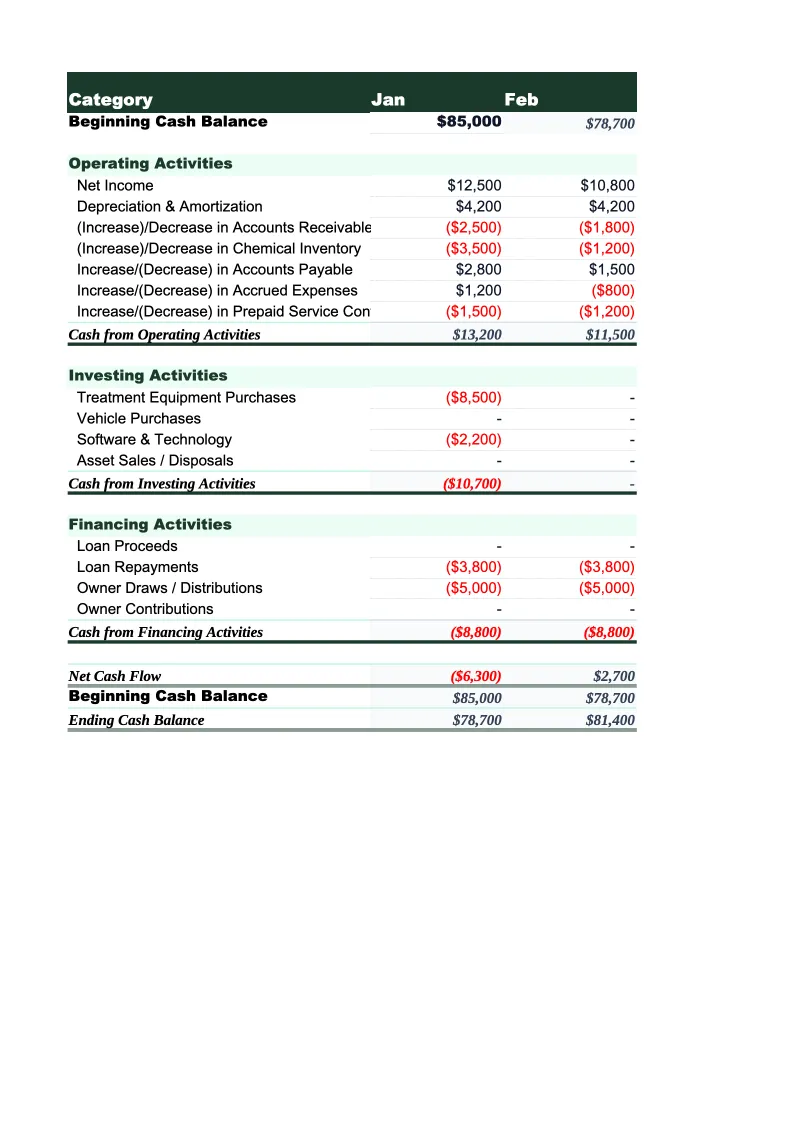
Pest Control Cash Flow Template
Track and forecast cash for your pest control business — recurring contracts, termite work, and seasonal programs — with weekly and annual views built around how the industry actually runs.
What's Inside This Pest Control Cash Flow Template
This template includes 4 worksheets, each designed for a specific part of your pest control financial workflow:
13-Week Cash Flow
A rolling 13-week cash forecast showing weekly cash receipts and disbursements for your pest control operation.
Annual Cash Flow
A month-by-month cash flow statement covering the full year, structured as a direct-method cash flow with operating, investing, and financing sections.
Cash Flow Statement
A formal cash flow statement following the indirect method, starting from net income and adjusting for non-cash items and working capital changes.
Dashboard
A visual summary showing your current cash position, runway in months at your current burn rate, and a chart of ending cash balances across the 13-week forecast.
Pest Control Cash Flow Template Features
- 13-week rolling cash forecast with weekly GPP contract and specialty service receipts
- Annual month-by-month view with operating, investing, and financing sections
- Indirect-method cash flow statement formatted for bank and lender review
- Seasonal ramp-up modeling for spring hiring and chemical stocking
- Runway calculation based on current cash balance and average weekly burn
- Separate tracking for recurring contract revenue vs. one-time treatment income
How to Use This Pest Control Cash Flow Spreadsheet
Start with the Annual Cash Flow sheet and enter your current cash balance on hand. Then fill in your recurring monthly contract revenue — this is the most predictable number in your business, so get it right. Add projected income from termite treatments and specialty services for each month, keeping in mind that termite swarm season (March–June) typically produces a spike in new treatment sales. Enter your major disbursements: payroll, chemical purchases, insurance renewals, and fleet costs. The sheet calculates ending cash balance by month automatically.
Use the 13-Week Cash Flow sheet for near-term planning. Enter your actual bank balance as of today, then work through the next 13 weeks projecting when you'll collect from customers (most recurring customers pay monthly, but commercial accounts often run 30-day invoices), and when major costs hit. If you pay for chemical inventory in bulk before spring, enter those payments in the disbursements column for the relevant week. The weekly view surfaces timing gaps between when cash goes out and when it comes in — which is where pest control companies get into trouble during seasonal transitions.
15 minutes from download to your first cash forecast
Download the template, enter your contract revenue and major costs, and see your pest control business's cash position for the next 13 weeks.
Why Pest Control Businesses Need a Cash Flow Template
Pest control businesses have one of the most predictable revenue structures in the service industry — recurring monthly contracts provide a reliable base — but cash flow still creates problems for most operators. The disconnect is timing. Chemical and materials costs hit before the spring season starts, payroll for new technicians runs weeks before those routes are fully productive, and commercial accounts often pay on 30 or 45-day terms even when you service them monthly. Without a cash flow forecast, operators discover these timing gaps after they're already in them.
The seasonal pattern in pest control is unusually sharp. Termite swarm season drives a surge in inspection and treatment revenue from March through June. Mosquito and tick programs launch in spring and run through fall. Core GPP contracts generate baseline revenue year-round, but the real cash management challenge is funding the seasonal ramp — hiring technicians, stocking chemicals, adding vehicles — before the revenue spike fully arrives. A 13-week rolling cash forecast lets you see exactly when that gap occurs and how much runway you have to cover it, whether through reserves, a line of credit, or timing your own draws differently.
Pest Control Industry at a Glance
Financial templates built for pest control businesses — from solo operators to multi-route companies. Pre-loaded with recurring contract, termite, and specialty treatment categories.
Revenue Drivers
- Recurring GPP contracts
- Termite treatments and monitoring
- Bed bug and specialty treatments
- Rodent control and exclusion
- Mosquito and tick programs
- Commercial pest control contracts
Key Cost Categories
- Technician wages and payroll taxes
- Pesticides, rodenticides, and materials
- Vehicle fuel and fleet maintenance
- Liability and commercial auto insurance
- Pesticide applicator license fees
- Route management and CRM software
Typical Margins
Gross: 45-60% · Net: 10-20%
Seasonality
Spring through fall drives new contract sign-ups and mosquito/tick program revenue; core GPP and commercial contracts provide year-round base revenue; termite swarm season (March–June) is a major driver of new termite treatment sales.
Key Performance Indicators
Pest Control Cash Flow Template FAQ
More Pest Control Templates
Pest Control Balance Sheet Template for Excel
$29
Pest Control Budget Template for Excel
$29
Pest Control Business Plan Template for Excel
$39
Pest Control Expense Tracker Template for Excel
$29
Pest Control Financial Model Template for Excel
$29
Pest Control Income Statement Template for Excel
$29
Pest Control Invoice Template for Excel
$29
Pest Control KPI Dashboard Template for Excel
$29
Pest Control P&L Template for Excel
$29
Pest Control Pro Forma Template for Excel
$29
Pest Control Project Budget Template for Excel
$29
Pest Control Sales Forecast Template for Excel
$29
Pest Control Business Valuation Template for Excel
$29
Pest Control Cash Flow Template
$29